
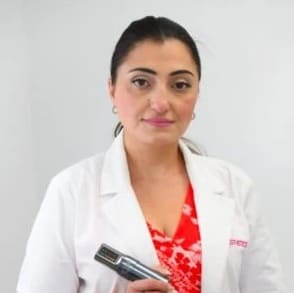
Author: expert Ella Pill
Instagram: @ella_permanentmakeup
21 years in the beauty industry. An expert in permanent makeup for Eyebrows, Lips, and Eyeliner.
PMU Courses teach students how to perform permanent makeup procedures safely, professionally, and with predictable healed results. A complete PMU course usually covers skin anatomy, sanitation, color theory, pigments, brow mapping, ombre brows, lip blush, eyeliner, client consultation, aftercare, and hands-on practice. Permanent makeup training helps future artists understand not only how to apply pigment, but also how to protect the client, choose the right technique, and create natural-looking results.
PMU Courses include skin anatomy because pigment behavior depends on the client’s skin. Students learn about the epidermis, dermis, skin thickness, skin type, oil production, sensitivity, and healing response. This knowledge helps PMU artists understand why pigment may heal differently on oily, dry, mature, sensitive, or previously tattooed skin.
PMU Courses teach sanitation because permanent makeup works with the skin barrier. Students study cleaning, disinfection, sterilization, gloves, disposable supplies, sharps disposal, workstation setup, and infection control. This part of PMU training is essential because safe procedures protect both the client and the artist.
PMU Courses introduce students to professional PMU machines, needle cartridges, pigments, mapping tools, numbing products, practice skins, and disposable supplies. Students learn how to prepare the workstation, set up the machine, choose the right needle, and maintain clean equipment. Proper tool handling helps future PMU artists work with more control and confidence.
PMU Courses teach color theory because healed permanent makeup depends on skin tone, undertone, pigment base, and fading. Students learn warm, cool, and neutral colors, pigment selection, color correction, and how pigments change after healing. This knowledge helps artists avoid brows that heal too gray, lips that heal unevenly, or old PMU that becomes too red, blue, or orange.
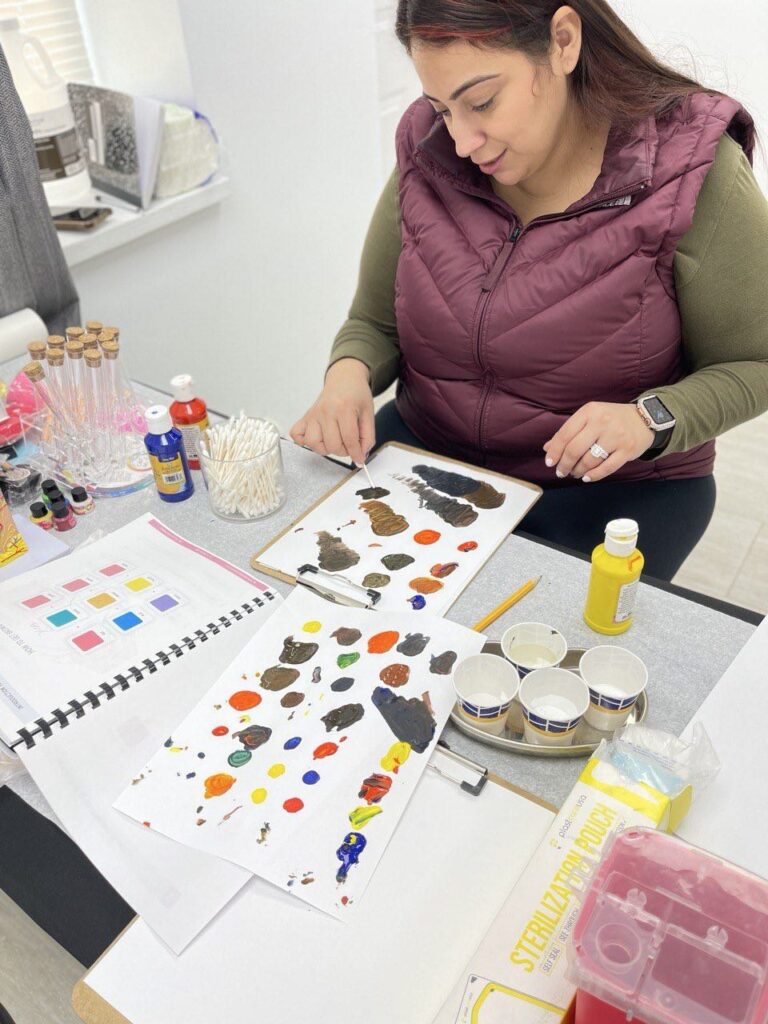
PMU Courses teach students how to conduct a professional client consultation before any procedure. Students learn how to review medical history, skin condition, allergies, previous PMU, client goals, and possible contraindications. A proper consultation helps the artist choose the safest treatment plan and set realistic expectations about healing, touch-ups, and final results.
PMU Courses usually include brow mapping because eyebrow design must match the client’s face, bone structure, eye shape, and natural brow growth. Students learn how to measure the brow start, arch, and tail to create balanced brows. PMU Courses also teach ombre brows, powder brows, shading, soft fronts, gradient color, and proper saturation for natural healed results.
PMU Courses teach lip blush because permanent lip color requires soft layering, correct pigment choice, and careful work on delicate tissue. Students learn lip anatomy, lip symmetry, border definition, color selection, swelling control, healing stages, and aftercare. Lip blush training helps students create natural color enhancement instead of harsh or artificial-looking lips.
PMU Courses teach permanent eyeliner and lash line enhancement because eye procedures require precision and strict safety. Students learn how to work with the lash line, choose the right eyeliner style, control depth, stretch the skin properly, and keep the client comfortable. Permanent eyeliner training helps future artists create subtle or more defined eye enhancement without overworking the skin.
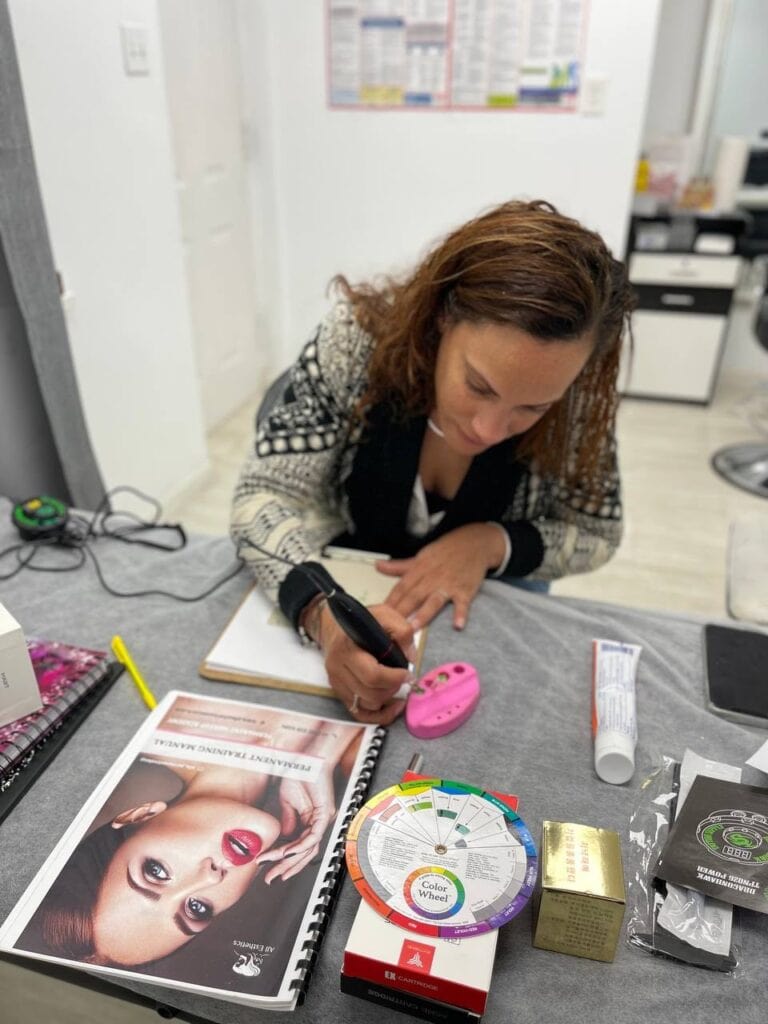
PMU Courses teach technical application through machine control, needle angle, hand speed, pressure, stretching, and pigment depth. Students practice how to place pigment evenly without going too shallow or too deep. This part of PMU training is important because correct depth affects color retention, healing, and the final appearance.
PMU Courses teach the healing process because fresh permanent makeup is not the final result. Students learn how brows, lips, and eyeliner change during healing, why pigment may look darker at first, and why touch-ups are often needed. PMU Courses also teach aftercare instructions so artists can explain cleansing, moisture control, sun protection, makeup restrictions, and follow-up appointments clearly.
PMU Courses include hands-on practice because permanent makeup cannot be learned only from theory. Students usually practice on artificial skin first and then move to live models under instructor supervision. This practical training helps future PMU artists build confidence, improve control, and understand how real skin responds during procedures.
PMU Courses may also teach business basics for students who want to work independently. Students can learn pricing, client communication, photography, consent forms, portfolio building, social media marketing, and service policies. These skills help new PMU artists start a professional beauty career with better organization and client trust.
PMU Courses at All Esthetics are designed for students who want personal attention, real practice, and a clear path into the permanent makeup industry. Training takes place in Floral Park, Long Island, just minutes from Queens, in a private one-on-one format where the instructor can focus on your technique, hand movement, pigment placement, and confidence instead of rushing through a crowded classroom.
PMU Courses at All Esthetics are taught by Ella, a certified permanent makeup specialist with more than 21 years of hands-on experience in PMU, microblading, nanopigmentation, brows, lips, and modern cosmetic tattooing techniques. Students learn from a practicing artist who works with real clients every day, understands different skin types and facial structures, and can explain how permanent makeup looks fresh, heals, fades, and needs to be corrected over time.
PMU Courses at All Esthetics combine theory with practical training, so students do not just watch procedures — students learn how to think and work like PMU artists. The program covers OSHA sanitation standards, skin anatomy, color theory, pigmentology, machine handling, needle basics, brow mapping, pigment mixing, dark lip coverage, client consultation, aftercare, and common beginner mistakes. This structure helps beginners build a strong foundation before moving toward real client work.
PMU Courses at All Esthetics are especially valuable because students receive real-time feedback during practice. Ella reviews each student’s work, corrects mistakes, explains how to improve shape and color choices, and helps students understand how to choose the right technique for each client. This personal guidance makes the course useful for complete beginners, licensed estheticians, cosmetologists, brow artists, makeup artists, and beauty professionals who want to add high-demand PMU services to their menu.
Many of our graduates successfully work as cosmetologists, microblading specialists, and permanent makeup artists in various salons in New York.


Welcome to All Esthetics
10 Verbena Ave, Floral Park, NY 11001.
Sign up for Microshading, Microblading, Permanent Makeup Lips…