
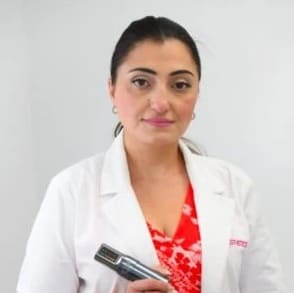
Author: expert Ella Pill
Instagram: @ella_permanentmakeup
21 years in the beauty industry. An expert in permanent makeup for Eyebrows, Lips, and Eyeliner.
Starting a PMU business in New York can be profitable, but it is rarely simple, fast, or “fully booked in 30 days.” Most new artists underestimate four things: licensing, sanitation requirements, client acquisition costs, and the time it takes to build trust. In New York City, permanent makeup and microblading work fall under tattoo licensing rules, and artists must complete the Health Department’s Infection Control Course before receiving a Tattoo Artist License.
The real opportunity is still there. Clients in New York actively look for permanent brows, lip blush, eyeliner, correction work, and natural-looking results. But a PMU business becomes stable only when artistic skill, compliance, positioning, pricing, and retention work together.
The biggest problem is not talent. The biggest problem is that many new PMU artists start as technicians, but the market rewards business owners.
A skilled artist can still fail if the brand looks generic, the before-and-after photos are weak, the consultation process feels unclear, or the pricing attracts the wrong client. In New York, competition is high, client expectations are high, and trust has to be earned before premium pricing becomes realistic.
Another hard truth is that social media attention is not the same as a business system. Likes do not guarantee consultations. Followers do not guarantee booked appointments. A PMU business grows when inquiries, consultations, booking flow, consent forms, aftercare, follow-ups, reviews, and referrals are managed consistently.
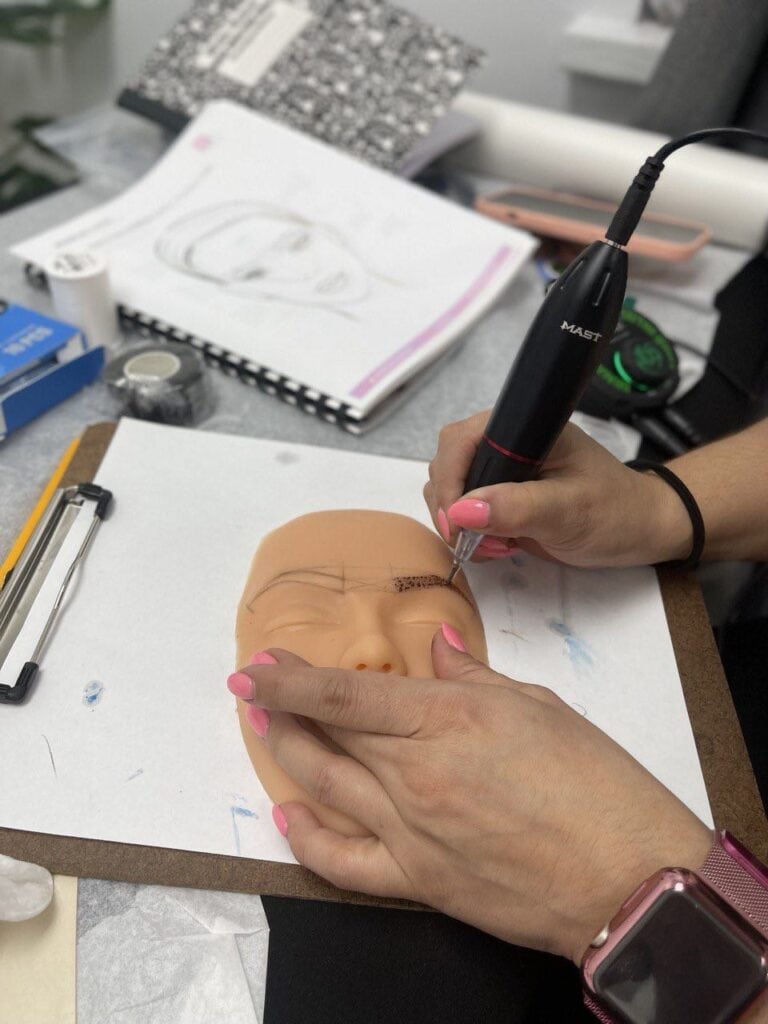
Starting a PMU business in New York is not just buying a machine and posting your first brow set. A real setup includes legal structure, licensing, sanitation compliance, branding, a service menu, pricing, client communication, and marketing.
Many artists also need a business entity and tax setup before they can operate cleanly. New York State forms LLCs by filing Articles of Organization with the Department of State, and the IRS issues EINs directly online at no cost.
That means the startup phase is part beauty business, part regulated service, and part local marketing launch.
Many beginners hear broad advice online and assume they can start casually. New York is not the easiest market for casual setup.
In New York City, permanent makeup artists and microblading artists are treated under tattoo licensing rules. NYC states that people who perform permanent makeup, microblading, scalp pigmentation, and microneedling must complete the Department of Health Infection Control Course before receiving a Tattoo Artist License. NYC also states that microblading requires a full-term Tattoo License.
That matters because compliance affects where and how you work, how you present your business, and how seriously clients take you. A PMU business built on shortcuts usually creates risk before it creates profit.
Most new PMU artists assume paid ads will save them. Paid ads can help, but ads rarely fix weak positioning.
Your first steady clients usually come from a combination of local visibility, referral momentum, strong before-and-after photos, model work, review generation, and a consultation process that removes fear. Permanent makeup is a trust-sensitive purchase. Clients worry about pain, shape, color, healing, asymmetry, and regret. If your business does not answer those fears clearly, marketing spend gets wasted.
That is why a smaller but sharper brand often outperforms a beginner who spends heavily on promotions with no real authority layer.
1. The cost of looking credible
A PMU brand needs more than a logo and Instagram page. Clients expect a professional website, clean service pages, visible policies, healed work, FAQs, and proof that your results suit different skin types and face structures.
A weak brand presentation creates hesitation. Hesitation lowers bookings even when the artist is technically capable.
2. The time required to build a quality portfolio
A real PMU portfolio is not just fresh work under perfect lighting. Clients want to see shape consistency, color choice, healed outcomes, and work on different faces.
A portfolio takes time because good results require multiple stages: consultation, procedure, healing, touch-up, and final photos. That means confidence in your business often grows slower than confidence in your hand skills.
3. The emotional weight of permanent work
PMU is not the same as offering a haircut or brow tint. Clients are trusting you with a semi-permanent or permanent facial change.
That creates pressure. New artists often underestimate consultation stress, perfectionism, difficult personalities, healing complaints, unrealistic expectations, and fear of negative reviews. Technical training matters, but emotional control and communication matter just as much.
4. The gap between revenue and profit
A $500 procedure does not mean $500 profit. Business expenses can include rent, chair rental, supplies, PPE, pigments, machine parts, numbing products where applicable, booking software, website costs, insurance, taxes, photography, and marketing.
That is why many new PMU artists feel busy but not financially stable. Revenue can look exciting long before the business becomes truly profitable.
A PMU business in New York is usually a strong fit for artists who are patient, detail-driven, comfortable with regulated beauty services, and willing to build trust slowly.
The best beginners are not always the fastest learners. They are often the most consistent learners. They document their work carefully, improve their consultations, respect hygiene protocols, and keep refining shape, color theory, and healing expectations.
PMU also suits artists who are ready to treat client experience as part of the service. In this market, communication is not an extra skill. Communication is part of the product.
A PMU business is a poor fit for anyone looking for fast money with minimal structure. It is also a poor fit for artists who dislike compliance, aftercare conversations, corrections, or long trust-building cycles.
If you do not want to study healed results, fix weak consultations, explain limitations, or invest in better systems, the New York market will expose those weaknesses quickly.
The same applies to artists who copy other people’s work without building a clear signature. In a crowded city, generic branding disappears fast.
Most beginners should not launch with every service at once. A narrow service menu is often more profitable early on.
For many new artists, brows become the starting point because they attract steady demand and help build a recognizable portfolio. Lip blush, permanent eyeliner, correction work, and removal may come later, depending on training, licensing, and confidence. The best launch strategy is usually depth before breadth.
A focused offer also makes marketing easier. It is easier to become “the artist known for soft natural powder brows” than “the artist who does everything.”
Learn the procedure
Training is the foundation, but training alone is not the business. You need enough repetition to produce safe, consistent work and to understand where beginners usually make mistakes.
Understand compliance
Before offering services, confirm the licensing, sanitation, and local operating requirements that apply to your location and service type. In New York City, that includes the Tattoo Artist License pathway and the Infection Control Course for permanent makeup artists.
Build a business structure
A clean business setup usually includes the business name, legal entity if needed, EIN, payment system, records, and tax organization. New York State and the IRS both provide official pathways for forming a business and getting an EIN.
Create a narrow offer
Choose the service or services you can perform consistently. A smaller, stronger menu usually converts better than a broad, weak one.
Build proof
You need before-and-after photos, healing content, testimonials, FAQs, and clear service explanations. Proof reduces fear, and fear reduction increases bookings.
Launch local visibility
Google Business Profile, local SEO, review requests, service pages, and referral systems often matter more than broad “viral” content for a local PMU business.
Clear niche positioning
Clients book faster when they know exactly what you are known for. “Natural powder brows in NYC” is stronger than “beauty services available.”
Strong consultation language
Consultations should explain shape, color, healing, touch-ups, limitations, and candidacy. Better consultations reduce refund pressure and increase client confidence.
Realistic pricing
Underpricing can attract bargain-focused clients who are harder to satisfy and less loyal. Smart early pricing should reflect your level, your market, and your overhead without training clients to expect discount-only PMU.
Review generation
In New York, social proof matters. A small number of detailed, credible reviews often helps more than generic self-promotion.
Healed-result education
Fresh work can sell the appointment, but healed-result education builds long-term authority. Clients want to know how color softens, how retention varies, and why touch-ups matter.
Trying to look “luxury” before building consistency
Luxury branding cannot hide weak results or weak systems. Premium pricing only works when the experience, communication, and proof support it.
Offering too many discounts
Heavy discounting can create the wrong client base. It may fill the schedule temporarily, but it often makes retention, referrals, and future price growth harder.
Copying competitors without strategy
Copying someone else’s fonts, captions, or service names does not create authority. Clients respond better to clear specialization, local relevance, and visible expertise.
Ignoring SEO and local search
A PMU business in New York should not rely only on Instagram. Many high-intent clients search for services directly, compare artists, read reviews, and visit websites before booking.
Failing to explain limitations
Every PMU service has boundaries. Skin type, prior work, scar tissue, color history, lifestyle, and aftercare all affect retention and results. When artists hide those limits, complaints increase.
Most PMU businesses do not feel stable in the first few months. The first stage is usually uneven. Some weeks feel exciting, and others feel silent.
Momentum usually improves when three things happen at the same time: the artist’s work becomes more consistent, the brand becomes more trustworthy, and the business becomes easier to find. That process often takes longer than online success stories suggest.
The healthier mindset is to build a repeatable system, not chase instant popularity.
Long-term PMU profitability comes from retention, referrals, reputation, and operational control. It does not come only from getting new clients every week.
A profitable PMU business usually has a clear service mix, stable pricing logic, strong aftercare systems, consistent reviews, and a recognizable aesthetic. It also has a reputation for honesty. Clients remember when an artist says, “You are not a good candidate for this technique.” That kind of honesty builds stronger demand over time.
If your goal is to build a PMU business in New York, start with one excellent service, one compliant setup, one clear message, and one repeatable client journey.
That approach works better than launching five services, guessing at pricing, posting random content, and hoping social media carries the business. Simplicity is not weakness. For a beginner, simplicity is usually the fastest route to professionalism.
| Expectation | Reality |
|---|---|
| “I just need training.” | Training is only one part of the business. Licensing, consultation, compliance, branding, and marketing matter too. |
| “If my work is good, clients will come.” | Good work helps, but clients need trust signals before they book. |
| “Cheap prices will help me grow faster.” | Cheap prices often attract low-commitment clients and make repositioning harder. |
| “Instagram is enough.” | Local SEO, reviews, website content, and Google visibility matter heavily for local bookings. |
| “I’ll know I made it when I get busy.” | Busy does not always mean profitable. Profit depends on margins, retention, and systems. |
Yes. In New York City, permanent makeup and microblading are handled under tattoo licensing rules, and artists must complete the NYC Health Department’s Infection Control Course before receiving a Tattoo Artist License.
Microblading is specifically referenced by NYC as work that requires a full-term Tattoo License. The city also includes permanent makeup artists in the Infection Control Course requirement.
Not every business owner chooses an LLC, but many artists consider one for structure and separation between personal and business operations. New York State forms LLCs through Articles of Organization filed with the Department of State.
Not every business owner chooses an LLC, but many artists consider one for structure and separation between personal and business operations. New York State forms LLCs through Articles of Organization filed with the Department of State.
There is no single number because startup cost depends on training, licensing, supplies, rent structure, branding, and marketing. The key point is that startup revenue and real profit are not the same thing.
The biggest mistake is thinking like a technician instead of a business owner. A PMU business needs compliance, consultation skill, trust signals, positioning, and systems, not just procedure knowledge.
Usually no. A narrow service menu is often easier to market, easier to deliver consistently, and easier to turn into a recognizable brand.
Yes, but it is not an easy market. Demand exists, but clients are selective, competition is strong, and trust standards are high.
Welcome to All Esthetics
10 Verbena Ave, Floral Park, NY 11001.
Sign up for Microshading, Microblading, Permanent Makeup Lips…