

Author: expert Ella Pill
Instagram: @ella_permanentmakeup
21 years in the beauty industry. An expert in permanent makeup for Eyebrows, Lips, and Eyeliner.
No – removing a tattoo at home is neither safe nor effective. At-home methods such as salabrasion, chemical acids, tattoo removal creams, and abrasive scrubbing can damage the skin without safely reaching the tattoo pigment. Professional laser tattoo removal remains the main medically accepted option because it targets ink in the dermis while reducing unnecessary injury to surrounding tissue.

When people search for ways to remove a tattoo at home, they usually find videos and blog posts promising a cheap, simple, and fast solution. That promise is appealing, especially when the tattoo no longer fits your lifestyle, career, or personal taste. The problem is that most DIY methods injure the skin surface long before they make any meaningful difference in the ink itself.
That is why tattoo removal should be approached as a medical-aesthetic procedure, not a home experiment.
Many people consider DIY tattoo removal for understandable reasons. Some want the tattoo gone as quickly as possible and feel discouraged by the fact that professional removal can take multiple sessions. Others are mainly concerned about cost. There is also a lot of misleading information online, and many tutorials focus on “hacks” without explaining the real risks.
However, a tattoo cannot be removed properly unless the treatment can affect pigment stored deeper in the skin. A method must either help the body break down and eliminate the pigment or physically remove the pigmented skin in a controlled medical setting. Home methods do neither safely. They usually damage the top layers of skin while leaving most of the deeper ink behind.
When people decide to remove a tattoo, the real goal is not just lightening the design at any cost. The goal is to improve the appearance of the skin without replacing the tattoo with scarring, discoloration, or texture irregularities.
The main reason home tattoo removal fails is anatomical. Most DIY methods affect only the epidermis, which is the outermost layer of skin. Tattoo pigment, however, is stored deeper in the dermis. That means acids, creams, exfoliants, and scrubbing methods may irritate or strip surface skin, but they do not reliably reach the ink where it actually sits.
This is why so many home techniques create the illusion of action while producing little real removal. The skin may peel, burn, blister, or darken, but the tattoo often remains visible because the treatment never reached the target layer. Professional laser tattoo removal works differently: the laser reaches the dermis, breaks pigment into smaller particles, and allows the body to clear those fragments gradually over time.
A lot of confusion around tattoo removal comes from myths. Some myths make DIY methods seem safer than they are, while others create unrealistic expectations about laser treatment.
Myth 1: If a DIY method causes peeling, it must be working.
Peeling skin is not the same as removing tattoo pigment. In many cases, peeling only means the skin barrier has been injured.
Myth 2: Laser tattoo removal is quick and simple.
Laser removal is effective, but it is rarely a one-session process. Most tattoos need multiple treatments spaced over time, and the exact timeline depends on ink depth, color, tattoo age, and skin response.
Myth 3: Laser tattoo removal is painless.
Laser removal usually involves discomfort. Many patients compare it to a rubber band snapping against the skin, although pain tolerance varies and clinics often use cooling or topical numbing to improve comfort.
Myth 4: Laser tattoo removal is safe for everyone without exceptions.
Laser tattoo removal is safe for many people, but not every patient is treated the same way. Skin tone, active skin conditions, medication use, healing history, and scarring tendency all affect risk and treatment planning.
Myth 5: There are no side effects after professional removal.
Professional removal is much safer than DIY treatment, but it can still cause temporary redness, swelling, scabbing, and irritation. The difference is that these effects are expected, monitored, and managed under proper clinical guidance.
DIY tattoo removal can lead to serious complications, many of which may be permanent. Common risks include permanent scarring, hyperpigmentation, infection, rashes, chemical burns, and severe irritation.
Methods such as acid peels, salt abrasion, and aggressive scrubbing are especially dangerous because they break the skin barrier. Once the skin is damaged, healing may be uneven. In some cases, the result is a scar or pigment change that becomes more noticeable than the tattoo itself. Unregulated products can also trigger allergic reactions or chemical burns, especially when the ingredients are unknown or used incorrectly.
The danger is not only cosmetic. Open skin created by DIY abrasion techniques can become infected, and delayed treatment can lead to more extensive tissue damage.
If you or someone you know has already tried home tattoo removal, it is important to recognize when the skin reaction is no longer minor irritation. Seek medical attention if you notice intense pain or burning that does not improve, spreading redness, warmth, swelling, pus, fever, chills, discoloration extending beyond the tattoo, or open wounds that are not beginning to heal within several days.
These signs suggest more than routine irritation. They may point to infection, deeper inflammation, or tissue injury that needs prompt treatment to reduce the risk of scarring.
Social media, forums, and short-form videos are full of tutorials showing how to “remove” a tattoo at home. Their popularity does not make them safe or effective.
Salabrasion involves injuring the upper layers of skin and applying salt or saline to the area. It is painful and highly traumatic to the skin. The theory is that abrasion and blistering will help bring the ink upward, but tattoo pigment sits too deep for this method to work reliably.
At best, salabrasion may cause slight fading. More often, it causes scarring, delayed healing, and infection.
Glycolic acid is commonly used in skincare, but that does not make it appropriate for tattoo removal. It removes surface layers of skin and can cause burning, irritation, and post-inflammatory pigmentation while still failing to reach deeper pigment effectively.
Tattoo removal creams are heavily marketed online and in retail stores, but there is no strong scientific support showing that they can remove tattoo pigment effectively. Because creams do not reach the dermis, they may only irritate the surface while increasing the risk of peeling, inflammation, and long-term marks.
Salicylic acid works on the outermost layer of skin. It may exfoliate dead cells, but it does not penetrate deeply enough to break down tattoo pigment stored in the dermis.
Some products are advertised as “laser tattoo removal pens” for home use. In reality, these devices are not equivalent to medical tattoo removal lasers. They are less controlled, less reliable, and unsafe in untrained hands. Improper use can lead to blistering, burns, scarring, and pigment changes.
Lemon juice, aloe vera mixtures, pumice stones, sandpaper, hydrogen peroxide, toothpaste, and similar “natural” or “viral” methods do not remove tattoo pigment in a controlled way. Some may mildly irritate or lighten the surface temporarily, but many increase the risk of inflammation, sensitivity, and uneven pigmentation.
If home methods are not safe or effective, the next question is obvious: what does work?
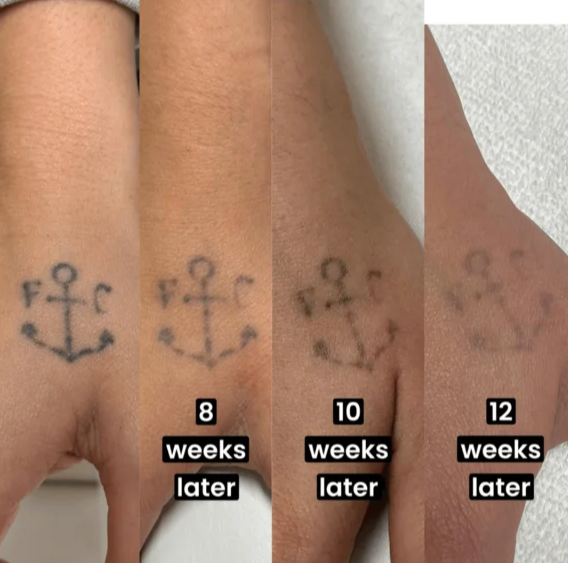
Laser tattoo removal is the primary option because it targets pigment in the dermis and gradually fades the tattoo over multiple sessions. This is the main professional method used when the goal is significant fading or full removal.
Surgical excision can remove a tattoo completely, but it is generally reserved for smaller tattoos because the tattooed skin is cut out and the wound is then closed. This approach is more invasive and leaves a surgical scar.
Dermabrasion is another professional option, though it is less commonly chosen as a first-line method. It removes outer skin layers mechanically and can involve significant redness during recovery.
The right option depends on tattoo size, location, ink colors, skin type, the desired cosmetic outcome, and whether the goal is full removal or only enough fading for a future cover-up.
One of the most useful ways to educate patients is to separate expected short-term side effects from signs of a true complication.
After professional laser tattoo removal, mild redness, swelling, itching, dryness, small blisters, or light scabbing can be part of normal healing. These effects are usually temporary and often improve over the following days or weeks when aftercare is followed correctly.
A complication is different. Infection, persistent or worsening inflammation, severe pigment changes, delayed wound healing, and scarring are not routine cosmetic reactions. These problems require professional evaluation. Picking scabs, ignoring aftercare, treating damaged skin at home, or returning to DIY methods after laser treatment can all increase the risk of long-term marks.
Not every patient wants complete tattoo removal. In some cases, the goal is to fade the existing tattoo enough to make room for a better cover-up design. This is an important distinction because the treatment strategy changes when the end goal changes.
Full removal is best when the patient wants the tattoo gone as completely as possible, with no plan to replace it.
Partial fading for a cover-up is best when the patient intends to work with a tattoo artist on a new design and only needs the original tattoo lightened to improve the final result. Modern clinics often discuss both goals during consultation because “clear skin” and “better cover-up conditions” are not the same treatment objective.
This is why treatment planning should begin with the desired outcome, not just the question of whether the tattoo can be removed.
Laser tattoo removal can be safe for many skin types, but the treatment is not identical for every patient. Darker skin tones require more careful planning because the laser interacts with pigment, and skin with more melanin has a higher risk of hyperpigmentation or hypopigmentation if the settings are too aggressive.
That does not mean patients with darker skin cannot be treated. It means provider experience, wavelength selection, conservative settings, and strict aftercare become even more important. Skin type is not a reason to avoid consultation; it is a reason to avoid DIY methods and choose a clinic that understands pigment safety and individualized treatment planning.
At All Esthetics, laser tattoo removal does not start with generic promises. It starts with a personalized evaluation of your tattoo, your skin, and your end goal. We assess the size, placement, ink depth, and color profile of the tattoo to determine the best approach for your case—whether that means complete removal or targeted fading for a future cover-up. This allows us to create a realistic treatment plan from the start and helps you avoid unrealistic expectations.
Your treatment is performed by a licensed specialist with 21 years of experience in the beauty industry. At All Esthetics, we focus on precision, safety, and honest expert guidance – not on promising that every tattoo can be removed in one session. Every procedure is performed in a clean, sterile environment, with settings carefully adjusted to your skin type and the characteristics of your tattoo pigment.
We use the PicoFocus® Laser, an advanced picosecond technology designed to break tattoo ink into much smaller particles without creating unnecessary heat in the surrounding tissue. This is especially important for clients who want visible fading while minimizing excess trauma to the skin, scarring risk, and prolonged recovery. The system can target a range of ink colors and allows us to select the right wavelength for each treatment goal.
We treat a wide variety of cases, including older tattoos, unwanted designs, poorly executed work, dense professional ink, and tattoos that need to be lightened before a new cover-up. If your goal is not just to “do something” about a tattoo, but to achieve a cleaner, more controlled, and more professional result, All Esthetics offers a treatment approach built around evaluation, strategy, and skin quality at every stage.
Welcome to All Esthetics
10 Verbena Ave, Floral Park, NY 11001.
Sign up for Microshading, Microblading, Permanent Makeup Lips…