
Author: expert Ella
Instagram: @ella_permanentmakeup
Ella is a scalp micropigmentation and permanent makeup practitioner at All Esthetics with 21 years of experience in the beauty industry.
Content
Hair loss solutions are often compared as if they all do the same job. They do not.
Scalp micropigmentation (SMP), hair transplants, and hair fibers can all make hair loss less visible, but they work in fundamentally different ways:
The best option is not automatically the most permanent, the most affordable, or the most popular online. It is the option that fits your hair-loss pattern, donor supply, lifestyle, budget, and the look you actually want to maintain.
This guide explains the real differences – without pretending that one solution is right for everyone.
Important: Hair loss can have many causes, including androgenetic alopecia, autoimmune conditions, scalp disease, medication effects, nutritional issues, and stress-related shedding. A sudden, patchy, painful, inflamed, or rapidly progressing hair-loss pattern should be evaluated by a dermatologist or qualified medical professional before choosing a cosmetic solution.
Choose hair fibers if you still have enough hair for fibers to attach to and want immediate, low-commitment coverage.
Choose scalp micropigmentation if you want a long-lasting cosmetic improvement without surgery, are comfortable with a closely cropped look, need scar camouflage, or have too little donor hair for a meaningful transplant.
Consider a hair transplant if you have adequate donor hair, stable hair loss, realistic expectations, and want actual growing hair with the flexibility to wear it longer.
For some people, the strongest plan is not one option alone. A transplant may restore a hairline while SMP improves the visual density behind it. SMP may also camouflage transplant scars or help reduce the contrast between scalp and hair in a thinning crown.
At All Esthetics, we provide personalized scalp micropigmentation in Floral Park, Long Island, NY, for clients seeking a sharper hairline, fuller-looking density, or scar camouflage without hair-transplant surgery. We welcome clients from Floral Park, Queens, Nassau County, and nearby New York communities. Each SMP plan is designed around your hair-loss pattern, skin tone, remaining hair, and the realistic result you want to maintain.
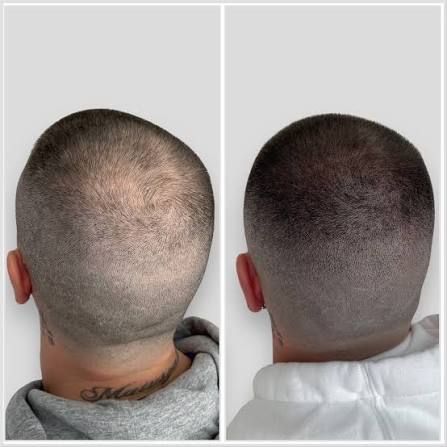
Hair fibers: temporary camouflage
Hair fibers are tiny cosmetic particles, often made from keratin or similar materials, that cling to existing hairs. They reduce the contrast between the scalp and the hair, making thinning areas appear denser.
They are not a medical treatment. They do not stop hair loss, create follicles, or regrow hair.
They can be very useful—but only in the right situation.
Hair fibers tend to work best for:
They are usually a poor fit for:
Scalp micropigmentation: long-lasting visual density
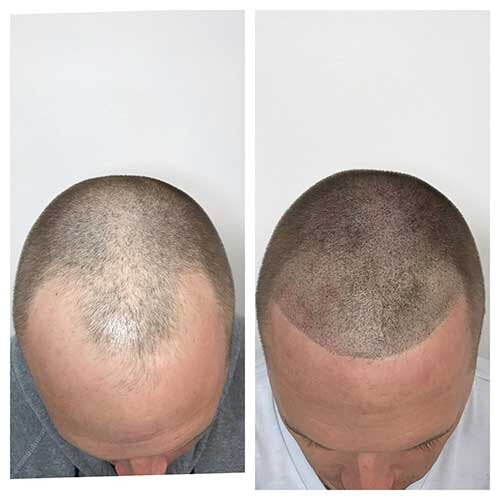
Scalp micropigmentation is a cosmetic pigmentation procedure. A trained practitioner places small pigment impressions into the scalp to replicate the appearance of closely shaved follicles or reduce visible scalp show-through in thinning hair.
SMP does not grow hair. It does not reactivate dormant follicles. It does not stop genetic hair loss.
What it can do is create a more defined hairline, the appearance of a fresh buzz cut, or a darker visual foundation beneath thinning hair.
SMP may be a strong option for:
SMP requires careful planning. A natural result depends on many details: pigment tone, dot size, placement, density, hairline design, remaining hair color, skin characteristics, and the likely future progression of hair loss.
Learn More About Scalp Micropigmentation in Floral Park, NY.
Hair transplant: real hair growth through surgery
A hair transplant moves follicles from a donor area – usually the back and sides of the scalp – to thinning or bald areas.
The two main approaches are:
A transplant is the only option in this comparison that can produce real, growing hair in the recipient area. That gives it a major advantage for people who want length, texture, styling flexibility, and a conventional hairstyle.
But it is not a simple “one-and-done cure” for every person.
Transplant candidacy depends heavily on donor density, hair caliber, hair-loss pattern, scalp health, age, future hair-loss risk, medical history, and expectations. The transplanted hair may grow long-term, but the non-transplanted native hair can continue to thin over time.
Hair fibers are often dismissed as a “temporary fix.” That is unfair. Temporary coverage can be exactly what someone needs.
They are inexpensive compared with procedures, easy to test, and can provide an immediate improvement when used correctly. For early crown thinning or diffuse thinning, quality fibers can make a real visual difference.
However, their limitations are practical and important.
Hair fibers are not reliable on bare scalp
Fibers need existing hair to grip. If an area is very sparse or completely bald, the product may look patchy, powdery, or artificial – especially in bright light.
They require routine and planning
Most users need to reapply fibers after washing their hair. Sweat, rain, wind, swimming, touching the hair, and friction from hats can affect the result. Setting sprays may improve hold, but they do not turn fibers into a permanent solution.
They can become mentally exhausting
For some people, the main downside is not the time it takes to apply fibers. It is the vigilance: checking the mirror, avoiding heavy rain, worrying about collars, pillowcases, pool days, or someone touching their hair.
Not everyone feels that way. But if you do, it is reasonable to consider a lower-maintenance option.
SMP is often most powerful when the goal is clear: create the appearance of a sharp, intentional shaved hairstyle or reduce scalp visibility in a carefully planned density treatment.
It is not “fake hair.” It is a cosmetic visual solution. That distinction matters because honest expectations produce better decisions.
Advantages of scalp micropigmentation
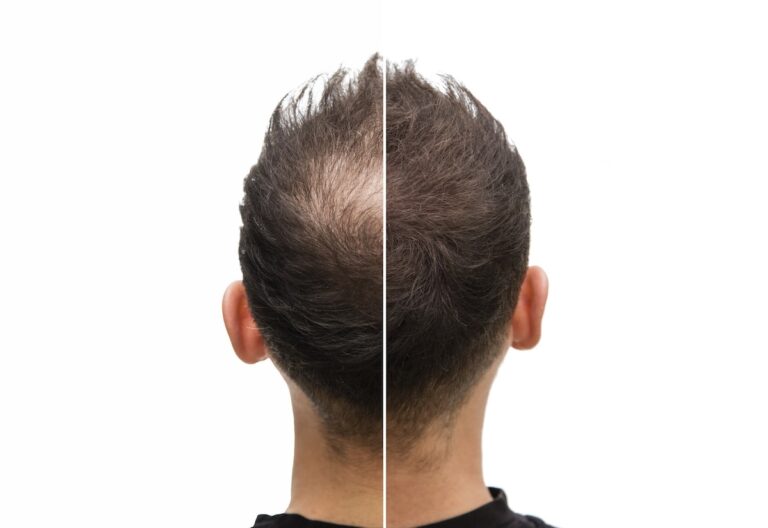
The limitations of SMP
The strongest SMP is conservative. A natural hairline should age well, match the client’s facial structure, and leave room for future changes in hair loss.
A transplant may be the right option when the priority is real hair that can be cut, styled, colored, and worn at length.
That advantage is substantial. But a hair transplant is not simply a purchase of unlimited density.
Advantages of a transplant
The limits and risks people should understand
A transplant has a finite donor supply. The back and sides of the scalp are not unlimited resources. If too many grafts are harvested or the plan is too aggressive, future options can become limited.
Other considerations include:
A transplant should be planned for the future, not just for the current hairline. This is especially important for younger clients with active, progressive hair loss.
There is no honest universal winner.
The naturalness of each option depends on whether it is used for the right problem.
Hair fibers can look natural when a person has enough existing hair, chooses a close color match, applies them lightly, and does not rely on them to cover bare scalp.
SMP can look highly realistic when it is designed conservatively and performed by an experienced practitioner. A great SMP treatment should not look like a stamped pattern or a painted-on hairline. It should mimic the irregularity, softness, and gradual density of natural follicles.
A hair transplant can look very natural when it is performed by a qualified, experienced surgeon with appropriate graft placement, density planning, and hairline design. It can also look unnatural if the hairline is too low, graft distribution is poor, or the result does not account for future loss.
The real question is not, “Which looks most natural?” It is:
Which option will look natural on my scalp, with my current hair, my lifestyle, and my likely future hair loss?
Yes. In the right case, combining the two can be more effective than choosing either treatment alone.
A transplant can provide real hair and hairline structure. SMP can reduce contrast between the scalp and hair, make limited graft density appear fuller, and camouflage donor-area or FUT scars.
Combination treatment may be useful for:
Timing should be individualized. The scalp and transplanted area need to heal fully before SMP is considered. A hair-transplant surgeon and an experienced SMP practitioner should assess the plan carefully rather than relying on a fixed timeline from the internet.
Ready to stop relying on hair fibers, hats, or daily cover-up products? At All Esthetics New York, we provide customized scalp micropigmentation (SMP) for men and women seeking a sharper, fuller-looking scalp without hair-transplant surgery.
SMP uses carefully placed pigment impressions to recreate the look of natural hair follicles, restore the appearance of a defined hairline, reduce visible scalp show-through, or camouflage hair-transplant scars. The goal is never a harsh, “painted-on” result—it is a natural-looking finish designed around your skin tone, remaining hair, facial features, and long-term goals.
Scalp micropigmentation may be an excellent option if you prefer a closely shaved style, have thinning or advanced hair loss, limited donor hair, or want a lower-maintenance alternative to daily hair fibers.
Your treatment plan is built gradually over multiple sessions, allowing us to refine density and create a balanced, realistic result. Schedule a consultation at All Esthetics New York to find out whether SMP is the right solution for you.
Welcome to All Esthetics
10 Verbena Ave, Floral Park, NY 11001.
Sign up for Microshading, Microblading, Permanent Makeup Lips…