

Author: Ella Pill
Instagram: @ella_permanentmakeup
Ella has 21 years of experience in the beauty industry and specializes in permanent makeup for eyebrows, lips, and eyeliner.
Microblading and other forms of permanent makeup are technically tattoo procedures – meaning pigment is inserted into the skin and falls under the broader FDA framework for tattoo safety. The key FDA guidance is simple: pigments are not FDA-approved for injection, “henna” and “black henna” products are often unsafe, and permanent tattoos (including brows, lips, eyeliner) carry risks that clients should understand before booking. Below – a clear, practical breakdown of what the FDA actually states and what it means for anyone considering permanent makeup.
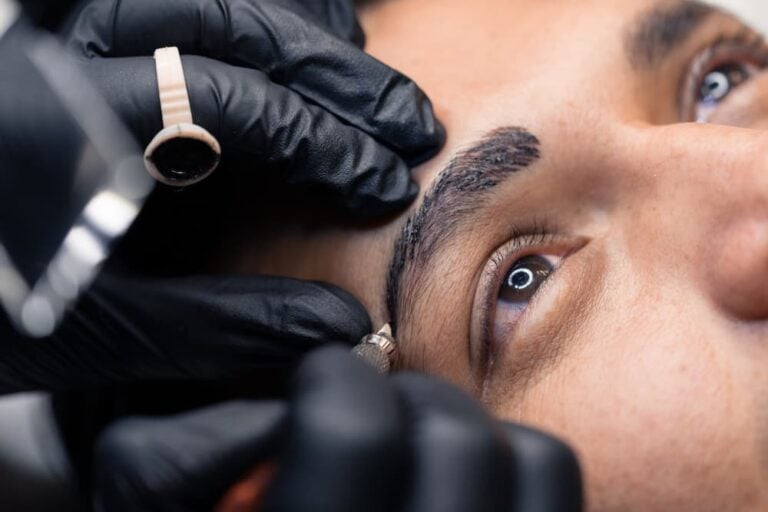
Short answer: Permanent makeup – including microblading, ombré brows, nano brows, eyeliner, and lip blushing – is a form of tattooing. A needle places colored pigment into the skin and the effect is long-lasting, though depth and techniques differ from traditional body tattoos.
Why this matters: Because PMU falls under the tattoo category, the same safety concerns apply: pigment quality, allergic reactions, infection control, equipment sterilization, and technician training.
Pigment is inserted into the dermis with a needle. These tattoos last a lifetime and fade slowly over years. PMU brows are technically included in this category – just applied more superficially and with cosmetic pigments.
Microblading, powder brows, ombré brows, nano brows, eyeliner, lip blushing – all fall under this umbrella. The goal is to mimic makeup using implanted pigment.
FDA perspective:
No pigment is FDA-approved for injection.
Safety depends on proper studio hygiene, technician skill, and pigment formulation.
Henna: plant dye that stains the skin for 3 days to a few weeks.
Black henna: often contains hair dye or chemicals not approved for use on skin and can cause severe allergic reactions.
PMU artists often see clients with scars or sensitivity caused by black henna reactions years earlier – something that must be disclosed during consultation.
They stick to the skin and last from one day to over a week. These do not relate to PMU, but FDA includes them in the general tattoo category for clarity around skin staining products.
Permanent makeup can be performed more safely when appropriate sanitation, sterile equipment, quality pigments, and proper aftercare are used. However, no procedure is completely risk-free.
FDA identifies the following concerns:
Caused by:
Non-sterile tools
Improper aftercare
Contaminated pigments
PMU professionals follow strict sanitation standards (single-use blades/needles, sterilized workstations, medical-grade disposables) to eliminate these risks.
Reactions can appear immediately or years later. FDA reports allergies specifically to:
inks
dyes
“henna” and “black henna” additives
In PMU practice, sensitivity tests are recommended for clients with known pigment allergies or autoimmune skin conditions.
PMU clients may experience:
localized swelling
redness
temporary irritation
increased sensitivity to sunlight
rare scarring (usually due to improper technique or picking during healing)
Permanent tattoos may cause temporary swelling or burning sensations during MRI imaging. Clients should inform their healthcare provider about their PMU.

FDA clearly states the following:
This includes PMU pigments and traditional tattoo inks.
Reports include blistering, burns, and long-term skin sensitivity.
Tattoo and PMU practice is regulated at the state and local level.
This means each state controls licensing, sanitation laws, inspections, and technician certification.
This includes infections, allergic reactions, contamination incidents, and pigment recalls.
Updates are posted at: www.fda.gov/cosmetics
When unsafe inks are identified, FDA ensures recalls are carried out effectively.
Two official channels exist:
1. MedWatch (Adverse Event Reporting)
Phone: 1-800-FDA-1088
Online: www.fda.gov/medwatch
2. Consumer Complaint Coordinators
Directory:
fda.gov/Safety/ReportaProblem/…
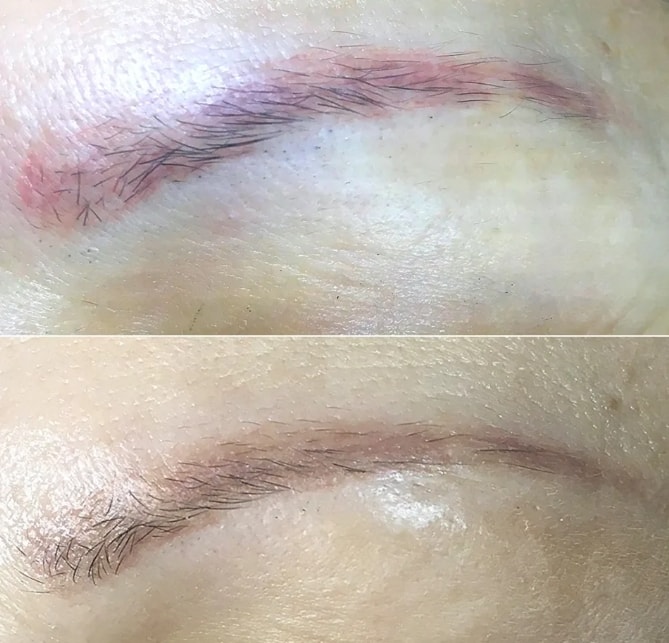
If a PMU client later decides to remove or significantly lighten their brows, lips, or eyeliner, FDA outlines realistic expectations:
FDA-approved laser devices can lighten or remove tattoo pigment.
Challenges:
Red, yellow, and green pigments are hardest to break down
Black and dark blue respond best
6–10+ sessions may be needed
Side effects include temporary redness, soreness, pinpoint bleeding
In PMU, saline removal is also common – but lasers remain the FDA-recognized method.
A rarely used method where skin is cut or abraded.
This always leaves a scar and is not considered an aesthetic option for PMU clients.
FDA explicitly states:
Tattoo-removal creams and at-home kits are not approved and may cause burns, rashes, and scars.
Your artist must follow proper sanitation and use individually packaged sterile needles.
Pigments should come from reputable U.S. suppliers with published safety documentation (SDS).
A patch test or medical questionnaire is recommended for sensitive clients.
Avoid “black henna” or unknown temporary tattoos before PMU – they can cause reactions years later.
Understand that removal is a process, not a guarantee.
Microblading and PMU are forms of tattooing – the same safety rules apply.
FDA does not approve tattoo pigments or henna for use on skin.
FDA does not oversee tattoo studios; your state does.
Risks include infection, allergic reactions, irritation, and rare MRI sensitivity.
Removal may require many laser sessions and may not fully erase pigment.
Working with a certified, experienced PMU artist dramatically reduces risks.
Welcome to All Esthetics
10 Verbena Ave, Floral Park, NY 11001.
Sign up for Microshading, Microblading, Permanent Makeup Lips…