Author: Ella – Permanent Makeup Specialist, All Esthetics.
Instagram: @ella_permanentmakeup
21 years in the beauty industry. An expert in permanent makeup for Eyebrows, Lips, and Eyeliner.
Brows that look too dark, have an unwanted shape, or retain a gray-blue tint can be frustrating long after the original appointment. Laser microblading removal can help lighten unwanted pigment, whether your goal is a softer appearance or preparation for a future brow redesign.
At All Esthetics we offer laser eyebrow tattoo removal for unwanted permanent makeup. The examples below illustrate various initial conditions and notable changes that occur during the removal process. Although clients often use the term “microblading” to refer to any form of tattooed eyebrows, we provide removal services regardless of whether the original procedure was microblading, powder brows, or any other technique.
These images show treatment stages and individual results. Lighting, camera angles, and skin redness can affect how pigment appears; a treatment-day photo is not the same as a healed result.
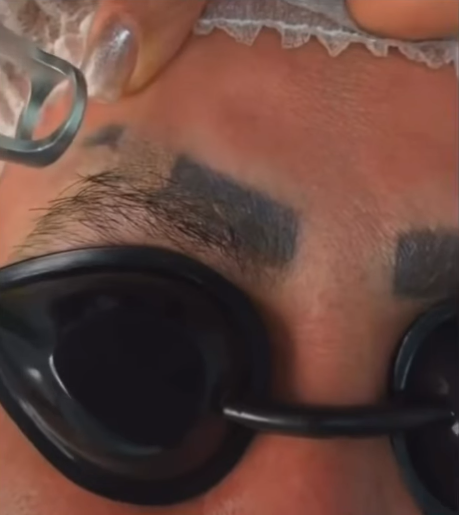
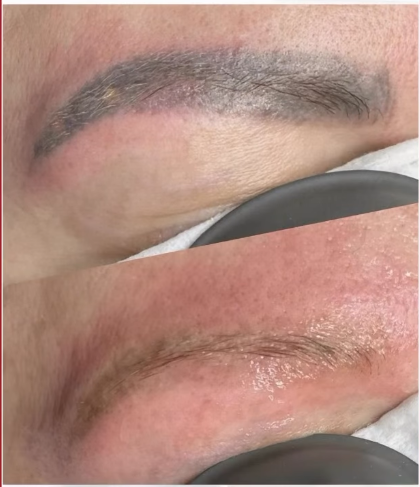
This treatment photo shows dense, blue-gray eyebrow pigment with a sharply defined inner edge. The solid color draws attention away from the natural brow hairs and gives the brow a heavier appearance. Laser removal targets the unwanted pigment to gradually soften that effect. This image documents treatment in progress, rather than a healed result. The amount of fading and any remaining color need to be assessed after the skin has fully healed before deciding whether another session is appropriate.
Before treatment, gray-brown pigment created a solid background beneath the natural brow hairs, making the eyebrows appear darker and heavier. After the first laser removal session, the old pigment is visibly lighter, especially through the body and tail of the brow. Individual hairs stand out more clearly, and the overall appearance is softer. Some residual pigment remains, but the comparison shows visible progress after just one session. Once the skin has healed, we can assess the remaining color and determine whether additional treatment is needed.
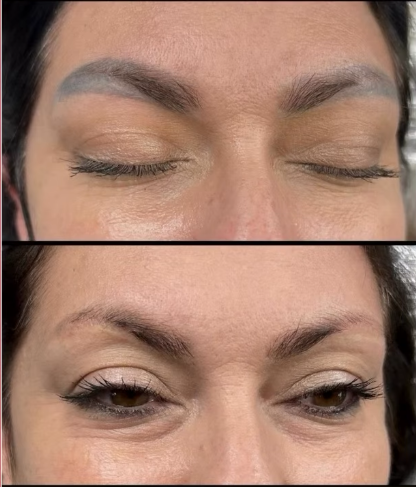
The original brows have a dense, cool-toned appearance, with squared inner corners and dark color extending through the arches and tails. In the lower photo, the solid background is less prominent, allowing the natural hairs to define more of the shape. The inner corners also look softer and less visually dominant. Residual color remains visible in places, particularly toward the outer brows. This is a meaningful reduction in the heavy appearance, without claiming that every trace of pigment has been removed.
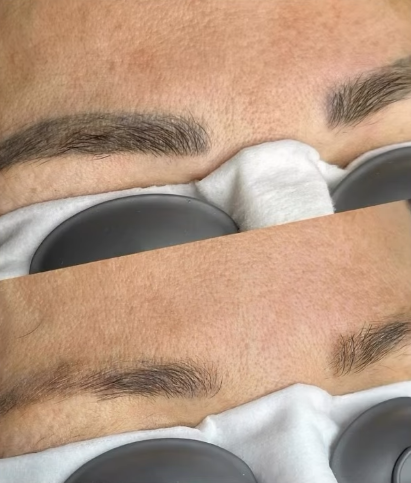
The upper photo shows a broad area of gray pigment surrounding the natural brow hairs, creating a shaded outline across the arch and tail. In the lower photo, this gray background looks substantially lighter, while the skin appears pink and shiny. That appearance should not be presented as a fully healed result. The important next step is to let the skin recover, then reassess the remaining pigment under consistent lighting.
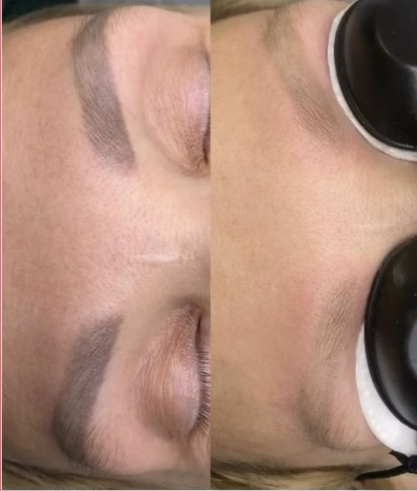
In the left-hand image, the brows have an even, filled-in appearance with a defined outline and a muted gray-brown tone. The right-hand image shows much less visible background color, leaving a lighter and less sharply outlined brow area. The comparison illustrates how reducing old pigment can change the overall visual weight of the eyebrows. The final result should be evaluated once the skin has healed.
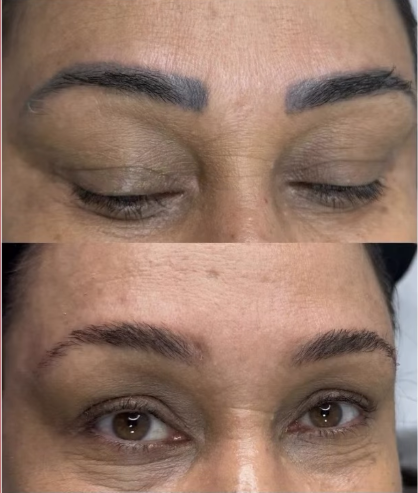
In the upper image, gray-blue pigment is particularly noticeable around the outer arches and tails, where it extends beyond the denser natural brow hairs. This creates a separate shaded outline that competes with the hair pattern. In the lower image, that outline is much less visible, and the natural brows provide a clearer shape. The most striking change is the reduction of the cool gray background near the tails. The photos show visible improvement, while any remaining pigment still needs a healed assessment.
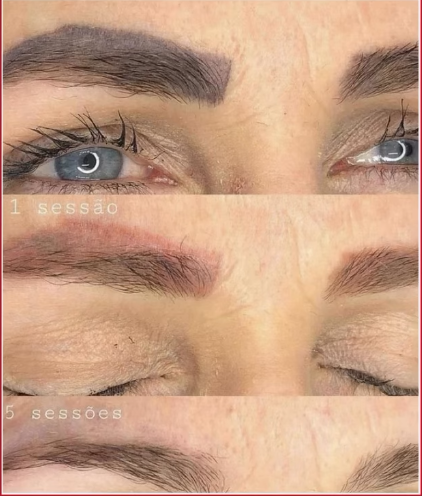
This three-stage collage shows why eyebrow tattoo removal is best evaluated over time. The first image has a dense, cool-toned background beneath the brow hairs. The middle image, labeled after one session, shows a lighter background with visible warmth and redness. In the final image, labeled after five sessions, the brows look softer, with less obvious residual shading. The progression documents this individual case; it does not mean every client will need five visits or achieve the same degree of fading.
Laser treatment breaks tattoo pigment into smaller particles that the body gradually clears. Several sessions may be needed, with time between visits for healing. Complete removal is not always possible. Cosmetic pigments can also change color or darken with laser exposure, so an individual assessment matters more than a fixed session count.
Removal carries risks, including skin color changes, infection, and scarring. Discuss your previous brow treatments, any cover-ups, and your medical history with your provider before treatment. Follow the aftercare instructions provided for your skin, and wait for a healed assessment before planning new permanent makeup.
You do not have to decide on a new brow shape before exploring removal. Start with a consultation at All Esthetics to discuss your existing pigment, the change you want, and whether laser eyebrow tattoo removal is appropriate for you.
Our Floral Park studio welcomes clients from Queens, Nassau County, and across Long Island. Whether your concern is dark pigment, an unwanted gray tone, or an old outline that no longer suits your brows, we can discuss a realistic next step.
Book your eyebrow tattoo removal consultation.
Learn more about laser eyebrow tattoo removal. allestheticsnewyork.com
Welcome to All Esthetics
10 Verbena Ave,
Floral Park, NY 11001.
Sign up for Microshading, Microblading, Permanent Makeup Lips…