
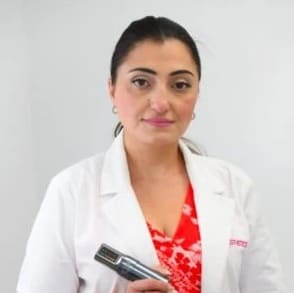
Author: expert Ella Pill
Instagram: @ella_permanentmakeup
21 years in the beauty industry. An expert in permanent makeup for Eyebrows, Lips, and Eyeliner.
Content
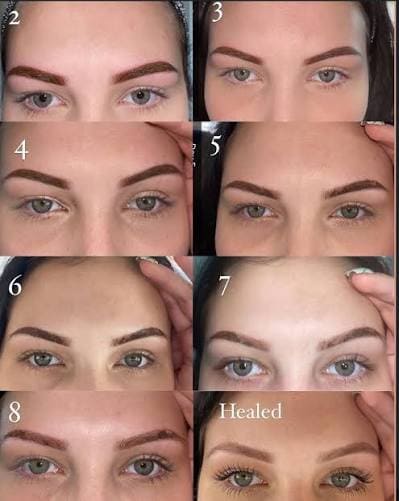
The microblading healing process usually takes about four to six weeks, although the most visible skin changes occur during the first 7 to 14 days. During this time, freshly microbladed eyebrows may look darker than expected, develop light flaking or scabbing, temporarily appear patchy, and then gradually soften into their final color.
These changes are usually part of normal healing. However, increasing pain, spreading redness, significant swelling, pus, fever, or delayed healing may indicate an infection or another complication that requires medical attention.
The most important rule is simple: follow the aftercare instructions provided by your microblading artist and do not judge the final result during the first few weeks.
Microblading is a form of cosmetic tattooing in which a trained artist uses a manual tool with fine needles to create hair-like strokes and place pigment into the upper layers of the skin. The controlled skin injury triggers the body’s natural wound-healing response.
Immediately after the procedure, the skin begins repairing the tiny channels created during pigment implantation. Mild redness, tenderness, swelling, tightness, itching, flaking, and temporary color changes can occur as the surface of the skin closes and renews.
Microblading pigment is initially mixed with small amounts of blood, lymphatic fluid, and temporary inflammation. As the skin heals and these effects subside, the eyebrows usually become lighter and less sharply defined. Microblading is considered a form of superficial micropigmentation, and healed results depend on pigment placement, skin characteristics, technique, and aftercare.Every client heals differently, so the following timeline should be treated as a general guide rather than a guaranteed schedule.
| Healing stage | What the eyebrows may look like | What the skin may feel like |
| Day 1–2 | Dark, bold, sharply defined | Mild redness, tenderness, tightness, or swelling |
| Day 3–5 | Darker or warmer than expected | Dry, tight, mildly itchy |
| Day 5–10 | Flaking, light scabbing, uneven color | Itchy or dry as the surface heals |
| Day 10–14 | Lighter, faded, or temporarily patchy | Less sensitive; flaking usually decreases |
| Weeks 3–4 | Pigment begins to look clearer and more balanced | Skin surface appears healed |
| Weeks 4–8 | Color and strokes become more stable | Final result can be evaluated |
During the next several days, microbladed eyebrows may appear even darker. The skin can feel tight, dry, or mildly tender as the surface begins to close.
Some clients become concerned that the eyebrows are too bold during this stage. However, the first few days do not show the final pigment color, stroke softness, or healed shape.
Continue following the cleaning and aftercare instructions provided by your artist. Do not apply foundation, concealer, brow makeup, exfoliating products, or unapproved ointments directly over the healing skin.
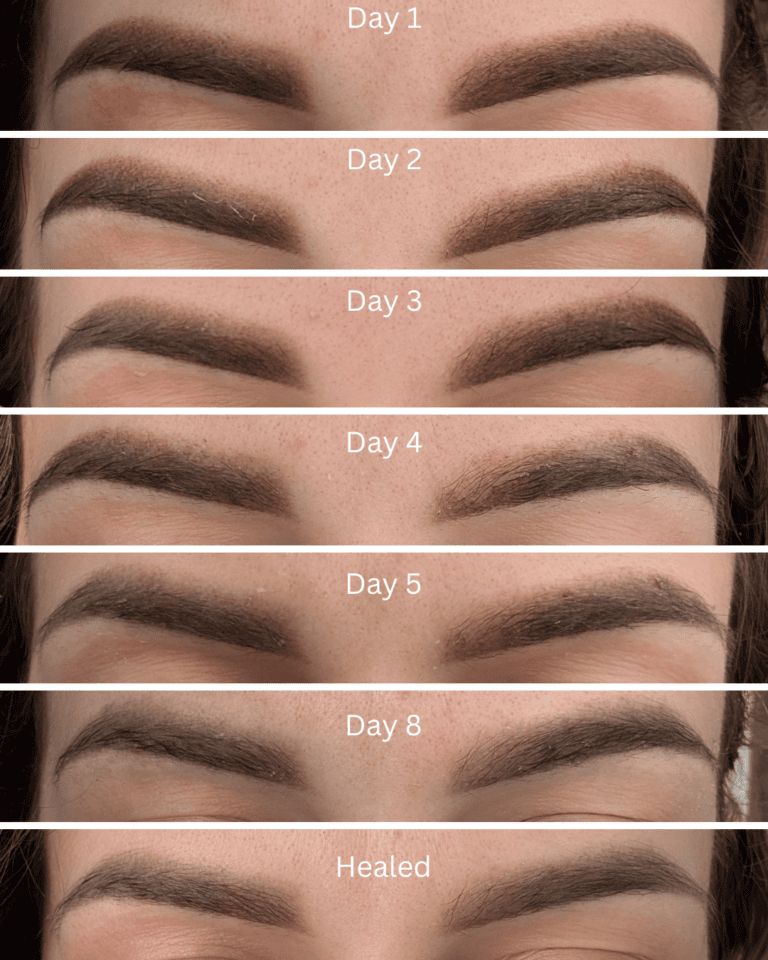
Light flaking or thin scabs commonly develop as the treated skin renews itself. The eyebrows may look uneven because some areas begin shedding before others.
Do not scratch, peel, rub, or pick at the flakes. Removing a scab before the skin underneath is ready can pull out pigment, create patchy areas, increase irritation, and potentially contribute to scarring.
Not every client develops visible scabbing. Minimal flaking can still represent normal healing, especially when the skin was treated conservatively and the aftercare protocol was followed correctly.
After the flakes fall away naturally, the pigment may appear surprisingly light, cloudy, uneven, or almost invisible. This temporary change is often called the ghosting stage.
Newly formed surface skin can temporarily cover and soften the appearance of the pigment underneath. As the skin continues to mature, the eyebrow color may become more visible again.
Do not assume that the pigment has completely disappeared, and do not schedule an immediate correction based only on how the eyebrows look during this stage.
Once the skin has fully recovered and the pigment has stabilized, the artist can evaluate color retention, symmetry, stroke definition, and any areas that healed unevenly.
A follow-up appointment may be recommended after approximately four to eight weeks, depending on the artist’s protocol and the client’s healing progress. During a touch-up, the artist may reinforce faded strokes, fill small gaps, adjust the shape, or refine the color.
A touch-up should not be performed while the skin is still irritated, peeling, inflamed, or otherwise incompletely healed.
Several temporary reactions can occur without indicating a complication.
Normal healing may include:
These reactions should generally improve rather than worsen as healing progresses.
Microblading creates small breaks in the skin, so infection and inflammatory reactions are possible. The FDA notes that contaminated ink and unsterile equipment can transmit infections, even when a procedure appears to have been performed hygienically. Other reported risks of cosmetic tattooing include allergic reactions, granulomas, keloid formation, swelling, burning, pigment migration, and difficulty removing unwanted pigment.
Contact a healthcare professional promptly if you develop:
Worsening pain, warmth, increased swelling, pus, fever, and yellow or golden crusts are recognized warning signs of wound infection.
Do not attempt to treat a suspected infection only with home remedies or cosmetic aftercare products. A dermatologist, primary care provider, urgent care clinician, or another qualified medical professional should evaluate concerning symptoms.
Correct microblading aftercare supports skin recovery and helps reduce avoidable pigment loss. Aftercare protocols can differ based on the artist’s technique, pigment system, skin type, and local health requirements, so your artist’s written instructions should remain the primary guide.
Hands can transfer bacteria to healing skin. Wash your hands thoroughly before cleaning the eyebrows or applying an approved aftercare product.
Avoid unnecessary touching, pressing, rubbing, or checking the skin throughout the day.
Some artists recommend gentle cleansing after the initial procedure, while others use a more restrictive short-term protocol. Current dermatologic wound-care principles generally favor gentle cleaning with mild, fragrance-free soap and water rather than leaving a wound contaminated or applying harsh disinfectants. The American Academy of Dermatology also advises washing hands before touching a healing cosmetic tattoo and using fragrance-free products.
When cleaning is permitted:
Brief, controlled cleansing is different from soaking the eyebrows. The goal is to keep the area clean without exposing it to prolonged moisture, friction, heat, or contaminated water.
If your artist recommends an ointment or balm, apply a very thin layer. A heavy coating can trap moisture, collect debris, and irritate the skin.
Do not automatically use antibiotic ointment, alcohol, hydrogen peroxide, essential oils, exfoliating products, or home remedies. Some topical antibiotics can cause allergic contact dermatitis and should not be used unless a healthcare professional recommends them.
Flakes should detach naturally. Picking can remove pigment before the skin has finished closing and may create uneven retention.
When itching develops, avoid scratching. Contact your artist if the itching becomes intense, spreads beyond the eyebrow area, or is accompanied by a rash, swelling, or drainage.
During the initial healing period, avoid:
Swimming pools, hot tubs, and other sources of prolonged immersion can expose healing skin to microorganisms and should be avoided until the area has healed.
You can usually shower, but keep the water pressure off the eyebrows and gently dry the area afterward according to your artist’s instructions.
Intense workouts can expose healing eyebrows to sweat, heat, friction, and repeated wiping. Your artist may recommend avoiding strenuous exercise for several days or throughout the initial flaking stage.
Light activity may be acceptable when it does not cause significant sweating. Avoid touching the brows with gym towels, clothing, hats, or unwashed hands.
Do not place eyebrow pencil, pomade, powder, foundation, concealer, or makeup brushes directly over open, flaking, or irritated skin.
Cosmetic products and applicators can introduce bacteria or trigger irritation. Makeup can usually be resumed after the skin surface has healed, but the exact timing should follow your artist’s instructions.
Avoid applying strong active ingredients directly around healing microbladed eyebrows. Potential irritants include:
These products can irritate healing skin and may accelerate pigment fading when used repeatedly over the eyebrow area.
Freshly treated skin is more vulnerable to irritation and discoloration. Avoid direct sun exposure while the eyebrows are actively healing.
Once the skin has fully healed, use a broad-spectrum sunscreen with SPF 30 or higher around the eyebrow area when appropriate.
Sun protection helps limit pigment fading and reduces post-inflammatory color changes. The American Academy of Dermatology recommends broad-spectrum, water-resistant SPF 30 or higher after a wound has healed.
During the first several nights, try to sleep on your back when possible. Side or stomach sleeping may press the eyebrows against a pillow and expose the area to friction, sweat, skin oils, and bacteria.
Use a clean pillowcase and avoid covering the eyebrows with an eye mask unless your artist has approved it.
Microblading aftercare is sometimes described as either dry healing or wet healing.
Dry healing generally limits water and aftercare products, while wet healing may include gentle cleansing and a thin layer of an approved ointment.
In practice, professional protocols often combine elements of both approaches.
The important distinction is not simply “water versus no water.” Effective aftercare should:
A blanket instruction never to clean the eyebrows can be inappropriate when blood, lymphatic fluid, sweat, makeup, or debris is present. At the same time, repeatedly saturating the area can soften flakes and interfere with pigment retention.
Ask your artist for written instructions explaining when to clean the eyebrows, which cleanser to use, whether an ointment is required, and how long each restriction applies.
Artist Technique and Pigment Depth
Pigment placed too superficially may fade quickly. Pigment placed too deeply can spread, blur, heal too dark, or behave more like a traditional tattoo.
Consistent depth, controlled pressure, correct needle selection, and knowledge of facial skin anatomy directly affect healing and stroke quality.
Aftercare Compliance
Picking scabs, applying makeup too early, sweating heavily, exposing the eyebrows to prolonged water, and using exfoliating skin-care products can contribute to uneven retention.
Good aftercare cannot correct poor technique, but poor aftercare can compromise otherwise well-executed microblading.
Sun Exposure
Ultraviolet exposure can accelerate pigment fading and influence how color changes over time. Long-term sun protection is therefore important after the skin has healed.
Skin-Care Treatments
Chemical peels, laser treatments, retinoids, exfoliating acids, and other resurfacing procedures can irritate the eyebrow area or cause the pigment to fade more quickly.
Tell your dermatologist, esthetician, laser technician, or medical provider that you have cosmetic tattoo pigment before undergoing a treatment around the forehead or eyebrows.
Health and Medications
Healing can be affected by medical conditions, immune function, bleeding tendencies, active skin disorders, and medications that alter clotting or skin repair.
Clients with a history of keloids, significant allergies, active infections, uncontrolled medical conditions, or recurrent inflammatory skin problems should discuss microblading with a qualified healthcare professional before scheduling the procedure. The FDA identifies infection, allergic reactions, granulomas, and keloid formation among the potential risks associated with permanent makeup.
A microblading touch-up is generally considered after the skin has healed and the pigment has stabilized. Depending on the artist’s technique and protocol, the follow-up may be scheduled approximately four to eight weeks after the initial appointment.
The touch-up appointment may be used to:
A touch-up is not an opportunity to ignore an active skin problem. If the eyebrows remain inflamed, painful, crusted, swollen, or irritated, the skin should be evaluated before additional pigment is implanted.
Not every light area needs aggressive correction. Adding too many strokes or repeatedly traumatizing the same skin can create blurred results and scar tissue.
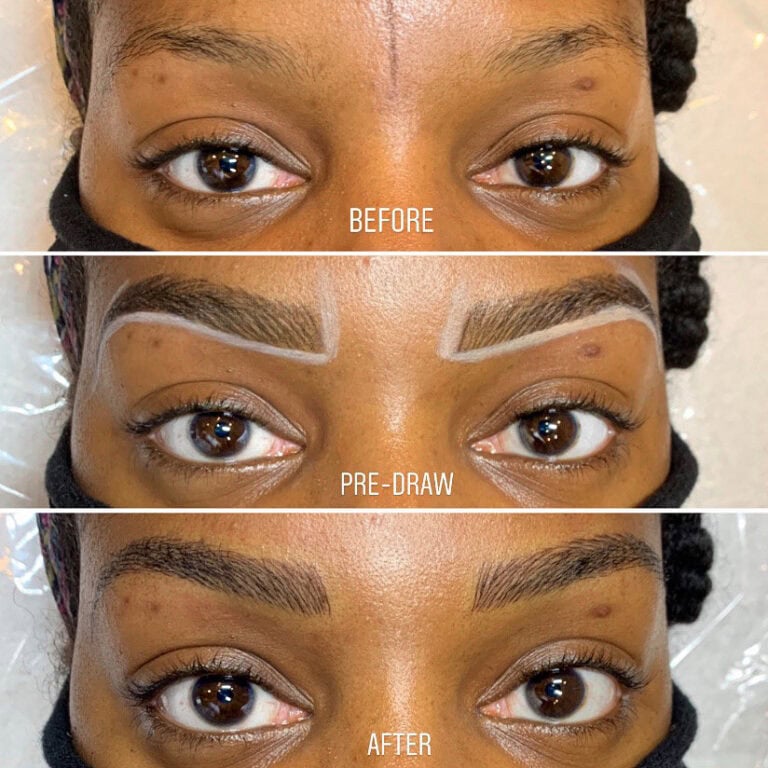
Ready for natural-looking, carefully shaped eyebrows? Ella Pill is a qualified permanent makeup artist offering professional microblading, touch-up appointments, and microblading removal in New York.
Each treatment includes personalized brow shape and pigment selection, careful attention to skin characteristics, and clear aftercare guidance. Schedule a consultation with Ella Pill to discuss your current brows, desired results, and the most suitable treatment option.
Welcome to All Esthetics
10 Verbena Ave, Floral Park, NY 11001.
Sign up for Microshading, Microblading, Permanent Makeup Lips…