
Author: expert Ella Pill
Instagram: @ella_permanentmakeup
21 years in the beauty industry. An expert in permanent makeup for Eyebrows, Lips, and Eyeliner.
Content
Choosing the perfect eyebrow shape for PMU is not about copying trends or asking for the same brows you saw on someone else. The best PMU brows are designed around your face shape, bone structure, eye placement, natural brow growth, and personal style. A flattering shape should make your features look more balanced, your eyes more open, and your overall expression softer, fresher, and more harmonious.
That is why great permanent makeup starts with mapping, not pigment. Before any PMU technique is chosen, the brow shape has to be carefully designed to fit the individual face. In other words, the perfect brow shape is not a trend. It is a custom plan.
Eyebrows frame the face more than most people realize. A slightly different arch, a longer tail, or a softer front can completely change how the eyes, forehead, cheekbones, and jawline are perceived. The right brow shape can make the face look more lifted and refined. The wrong shape can make the eyes look tired, the forehead look heavier, or the whole expression seem too harsh.
This matters even more with PMU because the result is long-lasting. When you wear makeup, you can wash it off and adjust it the next day. With permanent or semi-permanent brows, shape decisions carry more weight. That is why a skilled PMU artist spends time studying facial proportions, not just drawing a pretty outline.
Modern brow design is also moving away from stiff, overly dramatic brows. The goal today is softer, more natural, more personalized enhancement. Instead of forcing a strong shape onto the face, PMU should work with what is already there and make it look its best.
The biggest mistake people make is trying to match their brows to fashion instead of matching them to their own face. A brow that looks amazing on an influencer may not suit your bone structure, eye spacing, forehead height, or natural hair pattern.
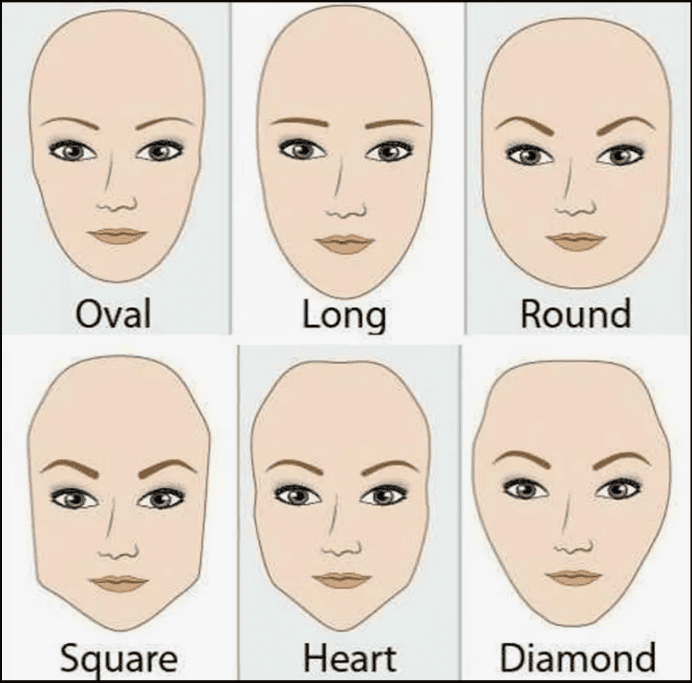
The goal is not to “match” the face shape literally, but to balance it. A round face usually benefits from more lift and definition. A longer face often looks better with a flatter brow. A square face needs softness in the right places. A heart-shaped face usually needs balance between a broader upper face and a narrower chin.
That is the real purpose of brow design: not decoration, but correction and harmony.
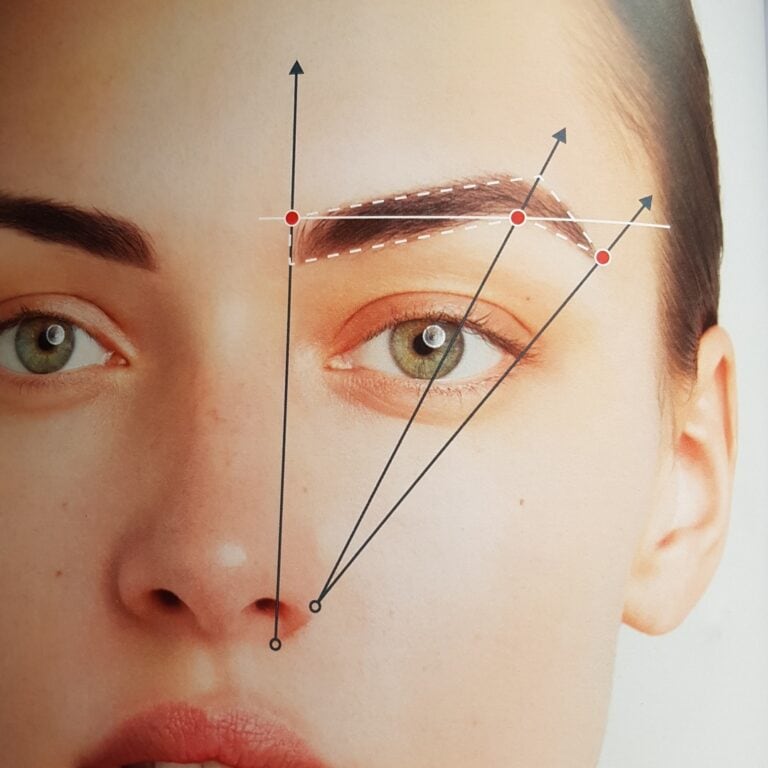
Professional PMU brow mapping usually starts with three key reference points: the start, the arch, and the tail.
The brow start is commonly aligned from the side of the nose upward toward the inner corner of the eye. This helps prevent the brows from starting too close together or too far apart.
The arch is often mapped by drawing a line from the nostril through the iris or pupil, depending on the client’s eye set and the desired effect. This point determines how lifted, soft, or straight the brow will look.
The tail is usually placed by drawing a line from the nostril through the outer corner of the eye. This defines where the brow should end without dragging the face downward.
A critical principle in PMU brow design is that the tail should not fall too low. A falling tail can make the face look sad, tired, or aged. In many mature clients, slightly lifting the tail is one of the simplest ways to create a fresher, more awake expression.
Oval faces are considered naturally balanced, so they usually have the most flexibility. A soft angled brow or a gentle arch often works beautifully because it keeps that harmony without adding too much drama. The goal is to enhance the face, not overpower it.
Very flat, overly wide, or harshly angular brows can disturb that balance. On an oval face, subtlety usually wins. A soft, polished shape tends to look the most timeless.
A round face usually benefits from a higher, more defined arch because it creates vertical lift and helps elongate the face visually. A brow with structure can add definition where the face is naturally softer.
Rounded brows are usually not the best choice here because they repeat the same circular effect and can make the face appear even rounder. A well-shaped brow for a round face often has a clean lift and a refined tail, but it still should not look overly sharp or aggressive.
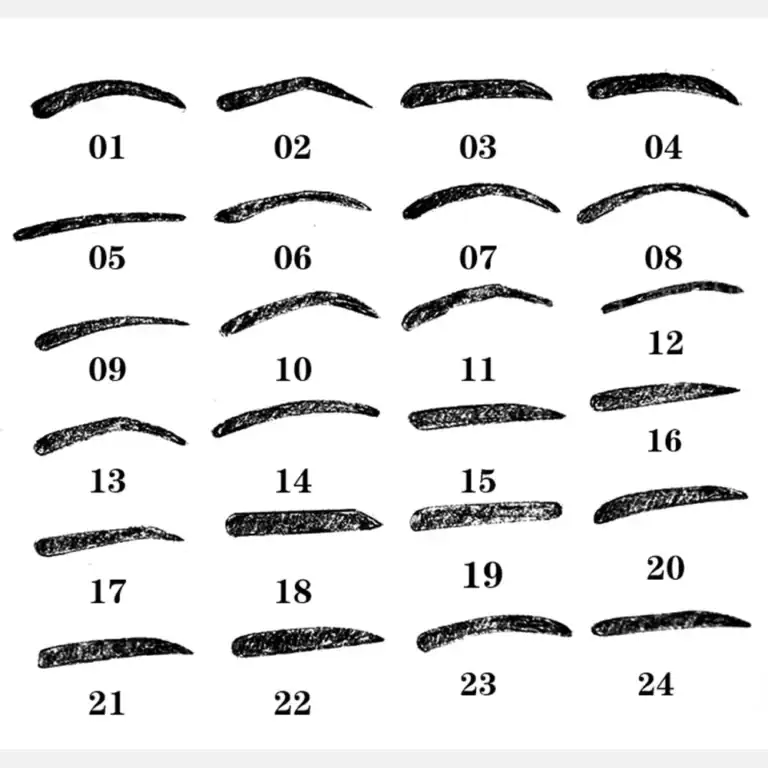
Square faces often have strong jawlines and bold bone structure. The best brows for this face shape usually soften those angles while keeping enough presence to balance the face. A softly curved brow or a rounded arch often works very well.
Very flat brows can make the face look more boxy. Extremely thin brows can also look out of place because they do not provide enough balance against stronger facial features. For square faces, medium fullness and a softened arch usually create the best result.
Long faces usually need the opposite of round faces. Instead of more vertical lift, they often benefit from a flatter, straighter brow that creates a horizontal effect. This helps the face appear shorter and more balanced.
A very high arch can make a long face appear even longer. For this face type, the best PMU design often includes a subtle arch, a smoother line, and careful control of the tail so the brows create width rather than excessive height.
Heart-shaped faces usually have a wider forehead and a narrower chin. The best brow shape for this type often includes a softer, rounded arch or a low, gentle lift. The goal is to soften the upper face and keep the brows from adding too much visual weight to the forehead.
Overly dramatic arches can exaggerate the top half of the face. On the other hand, a brow that is too straight or a tail that drops downward can make the expression look heavy or sad. Softness and controlled lift tend to be the most flattering choices.
Diamond-shaped faces often have prominent cheekbones and more angular structure through the mid-face. A curved brow with a gradual taper usually helps soften those angles while keeping everything balanced.
Very straight brows or extreme angular arches are often less flattering because they can make the face look sharper. A smooth curve usually creates a more elegant and harmonious effect.
This face shape is discussed less often, but it matters in professional brow design. A pear-shaped or trapezoid face is usually wider in the jaw area and narrower in the forehead. In these cases, slightly elongated brows with a clean, elegant line can help restore balance. A soft arch or gentle straight shape often works better than a short or overly rounded brow.
One of the most important principles in PMU is this: do not fight the natural brow pattern unless there is a very good reason. Working with the client’s existing growth direction almost always creates the most natural and low-maintenance result.
When a shape ignores the natural hair flow, the final brow can look forced. It may also become harder to maintain because the natural hairs will keep growing in a direction that conflicts with the PMU design.
This does not mean the artist cannot improve the brow. PMU can absolutely add fullness, build a better arch, extend a short tail, and create more visual symmetry. But the best results come from enhancement, not total reinvention.
A lot of clients ask for perfectly symmetrical brows, but no face is perfectly symmetrical. The real goal is visual balance, not mathematical identity.
Sometimes the brows should not be exactly the same if the muscles, brow bones, or facial expressions differ from one side to the other. A skilled artist may map each brow slightly differently so they look balanced when the whole face is at rest and in motion.
This is one of the most important differences between amateur shaping and professional PMU design. Perfectly equal measurements do not always create the most natural-looking result.
Many brow problems come from overdoing one part of the shape.
The front of the brow should not be too boxy, too dark, or too harsh. An overly square front can make the brows look stamped on. In modern PMU, softer transitions at the front usually look more natural.
The arch should not be too high or too sharp. Over-arched brows can create a constantly surprised or severe expression. In most cases, a gentler arch looks more elegant and ages better.
The tail should taper naturally. Tails that are too thin can make the brows look unfinished or dated. Tails that are too long or too low can drag the whole face down. A good tail finishes the brow without becoming the focus of the brow.
Brow shape is not just geometry. It is also about texture, density, and how the result will wear over time.
Thicker natural brow hair can support bolder shapes and stronger structure. Sparse brows often need a softer, more feathered or diffused finish so the PMU does not look disconnected from the natural hair.
Skin type matters too. On oily skin, very crisp edges may soften as the brows heal, so the design often needs to account for that. On mature skin, aggressive arches or thin shapes can look harsher over time. Softer, slightly fuller brows usually age more gracefully.
Age-related changes also affect tail position. As the skin loses elasticity, a low tail can make the face look more tired. That is why many artists subtly lift the tail in mature clients to create a fresher appearance.
One of the most common mistakes is choosing trendy brows over flattering brows. Another is placing the arch too high, which creates tension in the expression. Starting the brows too close together can make the nose look wider and the face heavier.
Too-thin tails are another frequent issue. They can age the face and make the brow look weak. Ignoring natural asymmetry is also a mistake, because two identical brow templates do not suit two different sides of a real face.
Perhaps the biggest mistake of all is trying to change the brow too dramatically. PMU can improve, balance, and refine, but the most beautiful results usually stay within the boundaries of what the face naturally supports.
A great PMU artist never chooses brow shape based on face shape alone. Real brow design is more detailed than that. Bone structure plays a major role. A prominent brow bone often looks better with a softer arch so the brows do not become too heavy. Subtle features may need a little more shaping to create definition.
Eye spacing matters too. For close-set eyes, starting the brows slightly farther apart can open the face. For wide-set eyes, bringing the starts a little closer can improve proportion. Eye shape also affects the arch. For round eyes, moving the highest point slightly outward can visually elongate the eye. For narrower eyes, a more centered arch may help soften and open the look.
Forehead height can influence the design as well. A taller forehead may look more balanced with lower, slightly fuller brows. A shorter forehead may benefit from a cleaner lift and a bit more breathing room.
Even lip fullness and overall facial softness can influence the right choice. Fuller features often carry fuller brows better, while delicate features may look more balanced with softer density and lighter definition.
PMU can do a lot. It can fill sparse areas, improve balance, extend a short tail, strengthen an arch, and create the appearance of more complete brows. It can also help clients who over-plucked in the past or who naturally have uneven brows.
What PMU cannot do well is erase strong natural hair growth outside the new design. If the natural brow grows far beyond the desired shape, that area will still need routine maintenance with tweezing, threading, or waxing. PMU also cannot make a completely unsuitable shape look natural just because it was technically applied well.
Technique matters, but shape matters first.
The perfect eyebrow shape for PMU is the one that makes your face look more balanced, your features more harmonious, and your expression more naturally polished. It should be based on face shape, but also on bone structure, eye spacing, forehead proportions, natural brow growth, density, age, and personal style.
The best PMU brows do not look like a trend pasted onto the face. They look like your own features, only more refined. That is why mapping is the foundation of every successful brow procedure. Before choosing nano brows, ombré powder brows, combo brows, or any other technique, the shape has to be right.
When the shape is right, everything else looks better.
A medium thickness brow with a soft arch is the most universally flattering starting point. From there, you customize based on face shape and personal style.
No. Aim for balanced and harmonious, not cloned. Natural asymmetry is normal.
If you look constantly surprised or your brow looks peaked instead of lifted, the arch is likely too high or placed too far inward.
Yes - within reason. Mapping, reshaping, and choosing the right technique can create better balance, but the best results work with your natural bone structure.
Welcome to All Esthetics
10 Verbena Ave, Floral Park, NY 11001.
Sign up for Microshading, Microblading, Permanent Makeup Lips…