
Author: expert Ella Pill
Instagram: @ella_permanentmakeup
21 years in the beauty industry. An expert in permanent makeup for Eyebrows, Lips, and Eyeliner.
Content
Permanent makeup can look soft, flattering, and beautifully natural – but it never heals exactly the same on everyone. One of the biggest factors behind your healed results is your skin. Oil production, pore size, texture, sensitivity, skin thickness, elasticity, melanin level, and undertone all influence how pigment is implanted, how it settles, and how long it lasts.
That is why permanent makeup is never truly one-size-fits-all. The technique that looks amazing on one client may heal too soft, too cool, too patchy, or too blurred on another. When the artist understands skin behavior and adjusts the approach accordingly, PMU becomes much more predictable, safer, and more natural-looking.
In this guide, you’ll learn how different skin types affect PMU results, which techniques tend to work best, how pigment selection changes from one complexion to another, and what realistic healing and longevity look like.
Permanent makeup pigment is implanted into the upper layers of the skin, but the skin itself determines how that pigment behaves over time. Think of skin as the canvas. A smooth, balanced canvas will hold pigment differently than a textured, oily, reactive, or delicate one.
Several skin factors directly affect your outcome:
Oil production. Excess oil can interfere with crisp healed detail, especially with fine brow strokes. It may also contribute to faster fading.
Pore size and texture. Larger pores and uneven texture can soften fine detail and make healed strokes appear less defined.
Thickness and elasticity. Thin, fragile, or mature skin needs a gentler, more conservative technique. Too much pressure or saturation can create trauma.
Sensitivity and inflammation. Reactive skin may become red, swollen, or irritated more easily, which can affect visibility during the procedure and influence healing.
Melanin level and undertone. Your complexion and undertone influence how pigment appears once healed. The exact same pigment can heal differently on two different people.
This is why experienced artists do not choose the same depth, needle, technique, pressure, or pigment for every client. They customize.
Oily skin is one of the more challenging skin types for PMU. It often has visible shine, larger pores, and a thicker or more textured surface. Some clients with oily skin also deal with frequent breakouts or congestion.
With this skin type, pigment retention can be less predictable because oil may push pigment outward during healing. Brow strokes are more likely to soften or blur, which is why traditional microblading is often not the best choice for very oily skin. Healed color can also appear cooler or ashier depending on the pigment used and the client’s undertone.
For oily skin, machine techniques usually perform better than stroke-heavy manual techniques. Powder brows and ombré brows are often the most reliable options because shaded pixels tend to remain more stable than fine hair-like cuts or strokes. A combination brow may also work well when the artist uses limited strokes and relies more on shading for long-term structure.
Clients with oily skin should also have realistic expectations. The goal is usually a soft, polished, powdery finish rather than ultra-crisp hair strokes that stay sharp forever. Maintenance may be needed more often than with dry or balanced skin.
Dry skin is often considered an excellent canvas for PMU when it is healthy and well-prepared. It usually has smaller pores, little excess oil, and a smoother matte finish. When dry skin is in good condition, it can retain pigment beautifully and heal with crisp, clean detail.
This skin type often responds well to microblading, nano brows, powder brows, or a combination technique. Brow strokes can look especially refined on dry-to-normal skin because there is less oil to disrupt the shape during healing.
That said, extremely dry or flaky skin can still create problems. If the skin is dehydrated, hardened, irritated, or actively peeling, pigment may heal unevenly. The client may lose color in patches if flakes lift too aggressively during the healing phase.
For dry skin, hydration and barrier support before the appointment matter. The skin does not need to be greasy or heavily moisturized on procedure day, but it should not be cracked, irritated, or excessively flaky.
Combination skin can be tricky because it behaves differently in different areas. A client may have more oil in one zone and dryness in another. In brows, this often means the front of the brow heals differently than the tail.
This skin type requires a more customized approach. An artist may use more shading where the skin is oilier and more careful detail where the skin is drier or smoother. In some cases, combination brows offer the best balance because they allow the artist to adapt the design to the skin rather than forcing one uniform technique across the entire brow.
Combination skin also needs balanced aftercare. Too much moisture can be a problem in oily zones, while too little support can lead to over-drying in drier areas.
Normal skin is the most predictable skin type for PMU. It is not overly oily or overly dry, usually has small pores, and tends to heal evenly. Pigment retention is often stable, and the artist has more freedom in choosing the technique.
Clients with normal skin are often good candidates for microblading, nano brows, powder brows, lip blush, and eyeliner, depending on the desired look. Because the skin is balanced, healed results are usually more consistent and touch-up needs may be less frequent.
This does not mean normal skin needs no customization. Even balanced skin still has its own undertone, sensitivity level, and lifestyle factors that affect retention. But overall, it is the most forgiving canvas.
Sensitive skin can react more strongly during and after the procedure. It may become red, irritated, swollen, or uncomfortable more quickly than other skin types. Some clients also use strong skincare products or have a history of allergies, dermatitis, or inflammatory reactions that can complicate healing.
Sensitive skin is not automatically a bad candidate for PMU, but it does require more caution. The artist should discuss ingredients, skincare, allergies, medications, and past reactions before starting. In some cases, patch testing may be appropriate.
Gentle technique is especially important here. Overworking the skin increases the chance of irritation and uneven healing. Aftercare should also be very simple, fragrance-free, and low-irritation. Clients should avoid retinoids, acids, exfoliants, benzoyl peroxide, and other active products near the treated area before and after the procedure.
Mature skin deserves special attention because it often becomes thinner, drier, less elastic, and more delicate over time. It may also show signs of sun damage, fine lines, or reduced collagen support.
This skin can still heal beautifully with PMU, but it does not respond well to aggressive work. Too much pressure, too much depth, or too much saturation can lead to trauma, bruising, migration, or an overly harsh healed look. Crisp manual strokes are often less reliable on thin, fragile skin than softer machine work.
For mature skin, soft powder brows are often one of the most flattering and safest options. In some cases, carefully executed nano work can be appropriate, but a “less is more” approach usually gives the best long-term results. Gradual building over touch-ups is often better than trying to achieve maximum intensity in one session.
Although each client is unique, some technique patterns are fairly consistent.
For oily skin, powder brows, ombré brows, and some combination brows usually heal more reliably than microblading alone. The same logic often applies to clients with larger pores or textured skin.
For dry or normal skin, there is usually more flexibility. Microblading, nano brows, powder brows, and combination brows may all work well, depending on the desired result and the condition of the skin.
For mature or thin skin, softer shading and gentle machine techniques are often more suitable than aggressive stroke-based work.
For sensitive skin, conservative saturation and lower-trauma techniques are usually preferable.
For combination skin, hybrid planning is often the smartest choice. One section of the brow may need more shading, while another can support more detail.
The main takeaway is simple: the “best” technique is not just about trends or photos. It is about what your skin can realistically heal well.
Skin type is not only about oil and dryness. Your melanin level and undertone also play a major role in PMU.
Many artists use the Fitzpatrick Scale, which classifies skin from Type I to Type VI based on complexion and how it reacts to sun exposure. This helps the artist predict how the skin may respond to trauma, what healing risks may exist, and how pigment may appear once settled.
Clients with higher melanin levels may be more prone to unwanted color shifts if pigment selection is poor. Darker or melanin-rich skin may also need richer, more saturated pigment choices to avoid an ashy or gray-looking result. On the other hand, very fair skin may require softer tones to avoid a harsh finish.
Undertone matters just as much. A client may have cool, warm, or neutral undertones. This affects which pigment family is most flattering and most stable over time.
A general rule is that cool-toned complexions often benefit from warmer or neutral pigment support, while warm-toned complexions often need cooler or neutral balance. Neutral undertones usually allow more flexibility. This is one reason artists sometimes custom-blend pigments instead of choosing a single off-the-shelf color.
The final healed result is always a mix of the implanted pigment and the client’s own skin tone and undertone. That is why two people can receive the same pigment and heal very differently.
The wrong pigment can create brows that heal too red, too orange, too gray, too blue, or simply unnatural for the client’s complexion. Good pigment selection is not just about choosing “brown” or “pink.” It involves tone, base, saturation, depth, and how the color will interact with the skin.
For brows, fair skin often looks best with softer, lighter shades. Medium skin tones usually have more flexibility with neutral and richer browns. Deeper skin tones often need richer, more saturated colors to create definition without healing muddy or ashy.
For lips, the natural lip color matters just as much as the facial skin tone. Lips are a thinner, more delicate tissue, and their existing hue strongly influences the healed result. Some clients with darker, uneven, or cool-toned lips may need color correction before the final target shade is layered in.
For eyeliner, black is not always just black. Some clients are better suited to true black, while others heal more naturally with charcoal, soft black, or black-brown.
An experienced artist should assess the skin in natural lighting, review undertone, ask about prior PMU, and explain how healing may affect the final color.
One important detail many general PMU articles skip is that different treatment areas behave differently.
Brows are heavily influenced by oil, pore size, and skin texture. This is why brow technique selection changes so much by skin type.
Lips are more delicate because lip tissue is thinner and more prone to dryness. If the lips are flaky, damaged, or dehydrated, pigment may heal patchy. Mature lips with reduced elasticity may also heal more intensely or require a lighter hand. Lip blush is often most successful when the lips are well-conditioned before the procedure and carefully protected during healing.
Eyeliner is less affected by oil in the same way brows are, but skin sensitivity, thickness, and pigment selection still matter. Clients seeking a very soft enhancement may do better with a brown-black or charcoal liner, while others want stronger definition.
Healing is one of the biggest reasons clients panic unnecessarily. The treated area may look darker right after the appointment, then lighter, patchier, or uneven during the healing phase before the true healed result settles in.
Dry skin may peel more and needs careful hydration support within the artist’s aftercare guidelines. Oily skin may appear to lose color more quickly during healing and may require more realistic expectations about softness and longevity. Sensitive skin may show more redness and swelling early on. Mature skin may need a slightly longer, gentler healing process.
In general, clients should understand that the final healed color usually does not appear immediately. It takes time for the skin to close, shed, and stabilize. Touch-ups are often a planned part of the process, not a sign that something went wrong.
Aftercare is not identical for every client. That is one of the most overlooked truths in PMU.
Oily skin usually benefits from keeping the area clean, dry, and free from heavy, overly occlusive products. Sweat, steam, workouts, and humidity can interfere with early retention.
Dry skin needs support without overdoing it. Excessive dryness can lead to cracking and pigment loss, but too much product can also affect healing.
Sensitive skin needs the simplest routine possible. Fragrance-free, gentle care is essential, along with strict avoidance of irritants.
Combination skin needs a balanced plan, not over-correction in either direction.
Across all skin types, clients should avoid sun exposure, picking, exfoliants, retinoids, harsh cleansers, and unnecessary friction during healing.
Skin type is a major factor, but it is not the only one.
Sun exposure can fade pigment faster over time. Active skincare ingredients such as retinoids, acids, and exfoliants can reduce longevity. Hormonal changes, medications, health conditions, and immune response can also affect retention and healing. Prior PMU work can influence how new pigment appears. Lifestyle habits such as hot yoga, intense workouts, steam rooms, and frequent swimming may also interfere with the healing process if resumed too soon. This is why a good consultation matters so much.
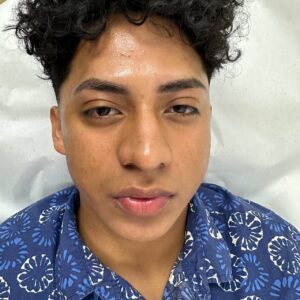
A proper consultation should do more than ask what style you like. It should evaluate the skin itself.
An experienced artist should assess oil level, pore size, texture, sensitivity, maturity, previous work, undertone, and overall skin condition in the treatment area. They should explain which technique makes sense for your skin, what results are realistic, how long healing may take, and what maintenance you may need.
They should also review skincare products, medications, allergies, medical considerations, and pre-care guidelines. If an artist promises the same outcome for every client regardless of skin behavior, that is a warning sign.
Customization is not optional in PMU. It is what separates beautiful healed work from disappointing results.
PMU longevity depends on technique, pigment quality, skin behavior, aftercare, sun exposure, skincare habits, and lifestyle.
In general, dry and normal skin often retain pigment longer and more clearly. Oily skin may fade faster and soften sooner. Mature skin can heal beautifully, but results are often best maintained with subtle, strategic touch-ups. Clients who use strong skincare ingredients or spend a lot of time in the sun may see faster fading as well.
The healthiest way to think about PMU is not as a one-time tattoo that looks the same forever. It is better viewed as long-wearing cosmetic enhancement that may need maintenance to stay fresh and flattering.
The best permanent makeup results happen when technique, pigment, and expectations are matched to the skin – not forced onto it.
Oily skin, dry skin, combination skin, sensitive skin, mature skin, melanin-rich skin, and fair skin can all achieve beautiful PMU results, but they do not all need the same approach. Skin type influences everything from brow technique to healed color, from aftercare to longevity.
When the artist understands how your skin behaves, the result is more natural, more stable, and more predictable. That is why a thoughtful consultation, customized pigment selection, and skin-specific technique matter just as much as artistic skill.
Permanent makeup should work with your skin, not against it. And when it does, the results can be truly beautiful.
It’s not automatically “bad,” but very oily, porous skin often causes hair strokes to blur and fade faster. Many oily-skin clients get better long-term results with powder/ombre or combo brows.
Yes—often with excellent results when the approach is gentle and soft. Powder brows or a conservative nano plan usually flatters mature skin and reduces trauma risk.
Not necessarily. Sensitive skin just needs more careful planning, gentle technique, and strict aftercare. Share your allergies and skincare routine before booking.
Yes. Undertone and melanin influence healed color. A trained artist chooses tones that heal naturally and avoids unwanted shifts.
Skin type, undertone, healing response, aftercare, and lifestyle can all change healed results. PMU is personalized, not copy-paste.
Welcome to All Esthetics
10 Verbena Ave, Floral Park, NY 11001.
Sign up for Microshading, Microblading, Permanent Makeup Lips…
We welcome customers at our second office: 519 Central Ave, Massapequa, NY 11758. Prices at this office are different. For information on service prices, please call